Global Ethics research at Birmingham brings together researchers working in the areas of applied ethics, political philosophy, and moral philosophy. Alongside cutting-edge interdisciplinary research, academics are committed to engaging with policy and the public.

We look at issues in global ethics, including gender justice, bioethics, climate change, conflict and security, democracy, distributive justice, and health. Our academics explore topics such as: our obligations and rights as global citizens; the parameters of engaging in legitimate killing; ways in which women’s rights can be better protected; and how we might conceptualise, and promote, health and happiness.
In addition, our researchers engage with policymakers and the broader public about our work. Some of our recent activity has spanned the themes of beauty and justice, sex-selective abortion, child soldiers, climate change, ethics of clinical trials, (de-)radicalisation and agency, surrogacy, and genetic selection. We respond to government consultations, have hosted both public lectures and workshops for practitioners, and sit on, and chair, ethics committees.
Postgraduate study
For postgraduates interested in studying programmes or modules in this area we offer the following taught MAs:
Our combined research and taught Philosophy MRes programme also includes modules in ethics and philosophy of religion, and those wishing to conduct pure research in the field may register for either of the following programmes:
We have a number of postgraduate researchers interested in ethics and philosophy of religion at Birmingham. For more information about their research projects, see our Postgraduate Research page. All of our postgraduate students benefit from the academic strengths of our research clusters and are often co-supervised by our Distinguished Research Professors and members of staff from associated clusters across the College of Arts and Law, so that they have access to a wide range of perspectives on their research topic. If you are interested in doing postgraduate research in ethics and philosophy of religion at Birmingham, please feel free to contact one of the members of staff below.
Supervisors in global ethics
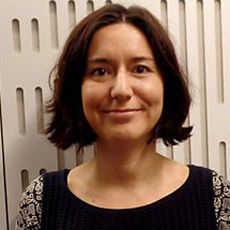
Professor of Philosophy
- Philosophy of psychology
- Philosophy of psychiatry
- Philosophy of medicine
- Empirically informed philosophy of mind
- Epistemology
- Biomedical ethics
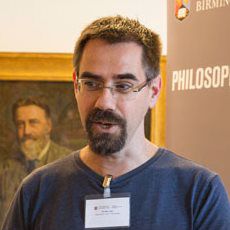
Senior Lecturer in Philosophy
- Meta-ethics
- Applied ethics
- Philosophy of medicine
- Ethical theories

Lecturer
- Global ethics
- Gender justice
- Bioethics
- Race justice
- Conflict

Associate Professor of Philosophy
- Global ethics
- Political philosophy
- Normative approaches to the internet

Reader in Philosophy
- Ethical theories
- Practical reason, reasons, and value theory
- Free will, moral responsibility and personal Identity
- Well-being and happiness
- Political philosophy
- Realism and anti-realism debates
- Early modern philosophy
Assistant Professor in the Ethics of Non-Violence
I am an Assistant Professor in the Ethics of Non-Violence. My current research focuses on the ethics of personal relationships and particularly on domestic violence. I am also interested in criminal justice, public justification, the social contract tradition, the future of work, and mental health.

Associate Professor in Philosophy
- Moral philosophy
- Political philosophy
Current and recent staff research projects
- A duty to beautiful? - beauty as an ethical ideal
- PERFECT: (Pragmatic and Epistemic Role of Factually Erroneous Cognitions and Thoughts) (funded by the European Research Council, 2014-2019)
- Perfect Me: Beauty as an Ethical Ideal
- The Pantheism and Panentheism Project - exploring alternative concepts of God (with Andrei Buckareff at Marist College; funded by the John Templeton Foundation; 2017-19)
- Beauty demands - addressing the changing requirements of beauty (funded by the AHRC, 2014-2016)
- The Epistemic Benefits of Imperfect Cognitions (funded by AHRC, 2013-14)
- Death, Immortality and the Afterlife (with David Cheetham at the University of Birmingham; funded by the Analytic Theology Project at the University of Innsbruck, 2012-14)
- Moral Responsibility and Psychopathology (funded by Wellcome Trust, 2012-13)
- Alternative Concepts of God (with Andrei Buckareff at Marist College; funded by the John Templeton Foundation; 2011-13)
- Rationality and Sanity (funded by Wellcome Trust, 2011)
- Toward and Nonphysicalist Monist Solution to the Mystery of Consciousness (with Max Velamns at Goldsmiths, University of London; funded by the John Templeton Foundation; 2009-11)
- TISS.EU (Evaluation of Legislation and Related Guidelines on the Procurement, Storage and Transfer of Human Tissues and Cells in the European Union - an Evidence-Based Impact Analysis) (co-applicant, funded by EC, 2008-11)
- Faiths and Development (co-applicant, funded by DIFD, 2005-11)
- Public Justification and Ethics (Leverhulme Early Career Fellowship Project)