The research will be showcased in an interactive and hands-on way to give the visitors the opportunity to become Daphnia detectives. This will include using microscopes and fluorescent particles to determine the presence and impact of microplastics on environments, alongside other water quality measurements such as nitrate concentrations using dipstick tests. This facilitates conversations about balancing different types of pollution such as natural (i.e. algae and nitrates) compared to anthropogenic contaminants (i.e. microplastics) and how we prioritise remediation. We will also have a tabletop escape room to showcase the process and problem-solving steps that are part of understanding evolutionary responses.
Dearbhla, the Daphnia, is a human sized Daphnia (a mascot costume) that has been custom designed to bring the Daphnia to the public. Dearbhla can act as an 'agony aunt' for the environment, and discuss environmental issues with the public whilst answering their questions in a dynamic and memorable way.
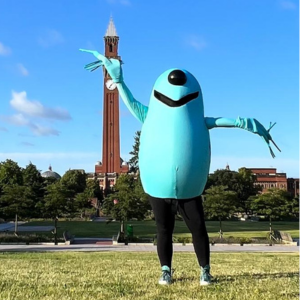
Dearbhla, the Daphnia
Dearbhla is our life sized and loveable Daphnia! She will be present at times during the exhibition (to ensure she doesn’t stray outside of her temperature niche) to answer the public’s questions on environmental issues, and for photo ops of course.
Water testing
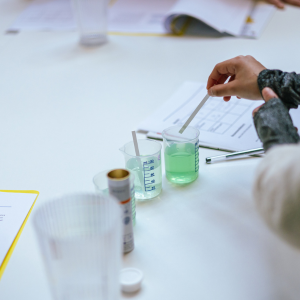
Water quality is of increasing public concern, and there is an increasing range of pollution too. During this task, the Daphnia Detectives will try to crack the case of where the pollution is coming from using the case file and notes supplied. There are three water samples from contributory sources and the detectives will need to assess algae (depending on how green it is), nitrate or nutrient pollution (using a dipstick) and microplastics by filtering and counting particles. This session is designed to spark discussion about how to prioritise pollutants, and the plastics are clear to highlight how difficult this can be to monitor.
Labyrinth
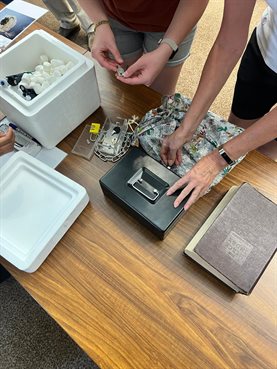
Microplastics are everywhere, with recent research finding four out of five of us have microplastic particles in our blood! How these plastics effect our biology however is still unknown. Using genetically identical waterfleas, much like twins, we can figure out how microplastic exposure effects DNA and how our genes work. Visitors will have the chance to put their detective skills to the test to solve the DNA escape room to figure out which Daphnia could survive the plastic pollution episode!
Microscope - Daphnia and particles
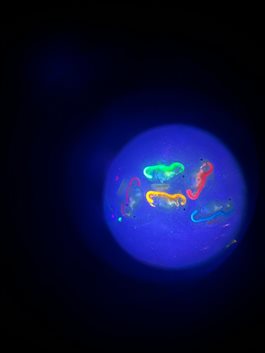
Showcasing Daphnia, we want to highlight the importance of environmental testing and the role that model organisms have played in research to date. We will have a microscope with fluorescent light source (hopefully linked to a monitor) with some Daphnia samples that have ingested fluorescent microplastics. This activity can spark discussion on testing methods and research approaches, and gives the participants opportunities to take photos of the Daphnia. There are potential extensions to this activity that build on different types of pollutants.