Like a hound upon its quarry: noble animals as elements of knightly material culture c.1350-1425
- Dates
- Wednesday 5 February 2025 (16:00-17:30)
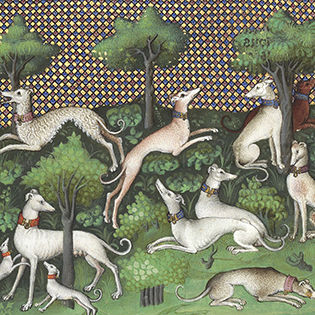
In collaboration with the Centre for the Study of the Middle Ages, CMCM will be welcoming Robert Williamson (History, University of North Carolina) on Wednesday 5 February.
Robert’s paper offers an assessment of why animals fit into the ontology of the late medieval knight’s material world. Animals – living, represented, heraldic, funerary, and metaphorical – were seen as possessions of, and creations produced by and for, their masters. Although horses and hawks were a reification of the knight’s elevated position in battle and society, we shall see that perhaps no beasts were as closely tied to him in life as his dogs.
We begin with an examination of the role of canine companions in affective spectacle. From the feasts in the great halls of the Count of Foix to Richard II’s surrender at Flint Castle, greyhounds acted as prostheses for the emotional display of elite men. In several episodes, these animals permitted their masters to show a tender side to knightly masculinity. We then turn to perhaps the most notable role of hounds: as metonyms for the behavior of men in acts of great violence. The medieval hunt was a tool for homosocial bonding, a test of loyalties, and a theatre of prowess where the lines between noble man and animal tended to blur in the minds of aristocrats.
The hunt was not for the sake of sport. It was didactic. In chivalric texts and images, representations of predators and prey allowed knights and their record keepers to displace the meaning of the hunt onto other realms of knightly self-fashioning. With reference to hounds and contemporary armor, duels, battles, and political rivalries were sometimes reimagined as ritual hunts or made more meaningful with allusion to the beasts and bloodshed of the chasse. In the process, the bascinet-wearing and brigandine-clad knights at the center of these episodes fashioned themselves as something more than human. Ultimately, perhaps the eyes and ears and sinews and bones of knights were not so different from those of their beastly companions.