Julian Greaves
It is with immense sadness that we announce the death of Dr Julian Greaves, a wonderful colleague and friend.
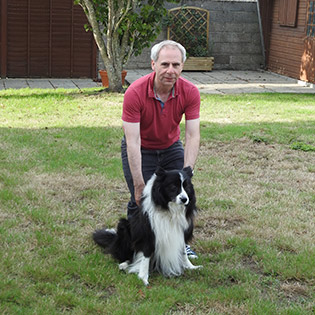 Julian’s career was defined by the History department at the University of Birmingham, and he defined it. Julian studied here as an undergraduate, gaining his BA in History in 1984, before graduating with a PhD in Economic and Social History eight years later, and becoming a Lecturer in Economic History in 2001.
Since that time, Julian’s contribution to the department and beyond was enormous. He was an extremely wise counsellor in all things, from curricular change, to assessment, to student support. He was kind, compassionate, and extremely perceptive – and he had a wonderful, dry sense of humour. We will desperately miss his collegiality, humanity, expertise and the echo of his booming voice in our corridors.
Tributes to Julian for inclusion on this page can be sent to artswebteam@contacts.bham.ac.uk. Please make sure to include your name and any institutional affiliation that you wish to be included in the attribution.
Although I only knew Julian for a few years, I cannot think of an area of the School that he didn’t work in or know everything about. He was the source of all knowledge and he would always be happy to explain any process, issue or why things worked as they did. He had time for every member of staff and when I started as Team Manager he was my barometer in meetings and I was always relieved if he agreed with me as it meant I was doing the right thing! He was kind and open and honest and I will miss him, the School is so very quiet without him around now.
Samantha Taylor (Team Manager, SHaC)
Thank you, Julian. We appreciate and miss you. Courtney.
Courtney J. Campbell, Department of History
I had the privilege of working with Julian for over fifteen years, much of which has been spent walking backwards and forwards along the second floor to Julian’s office to ask him questions, share a joke about the absurdity of it all, or simply for reassurance.
It’s very hard to encapsulate just how generous a person and colleague Julian was. I hadn’t really appreciated Julian’s brilliance and kindness until I became department exams officer. As someone new to the job I relied hugely on his time, knowledge and wisdom. The same has been true in all the admin and teaching I’ve done since then; in every one of them my job would have been impossible without Julian’s considerable help, often with Julian taking it on himself to figure something out or to search through files or emails for answers.
Whether the issue was a minor, technical one about a piece of software or a wider matter of philosophy or principle, Julian knew about it, had thought about it, and had a solution or work-around to any potential problems. Whenever changes were made to teaching or assessments, Julian had usually devised the solution to a problem before anyone had spotted the problem. And whether it was teaching a core module, or at a student induction meeting, meeting applicants at an Open Day or sitting in a committee meeting, Julian had a knack of making you feel like you were part of a team.
Like all Julian’s colleagues and many students I’m going to miss him terribly. I would like to send my deepest condolences to Julian’s family and friends.
Dr Chris Callow, Department of History
I first properly met Julian in 2013, when I was appointed Exams Officer for the Department of English Literature. As a novice in the area, I initially expected my encounters with Julian to be somewhat intimidating, given his well-known mastery of exams regulations and encyclopedic grasp of detail. But as I quickly found, this expectation could not have been further from the case. Julian was always practical and supportive, and was an indispensable source of wisdom and guidance throughout my time as Exams Officer. What I found most impressive about Julian was that, despite working in an intensely regulated area of University life, he always remained focused on the key reason why he was there: namely, to support colleagues in helping to facilitate the best outcomes for students. I remember in particular how, on one results day, when we had a particularly intractable difficulty with one student’s degree classification, Julian came downstairs to our Departmental office, logged on to one of our computers, and spent what seemed like half the morning trying to figure out how we could do more, within the rules, to help that student. I will remember Julian for such acts of practical, undemonstrative generosity, as well as for his understated humour and his unforgettably resonant voice.
Gillian Wright, Department of English Literature
It was in 1998 when Julian and I met for the first time. This was the beginning of a good working relationship based on shared values and mutual respect that turned over the years into a reassuring and trusting friendship. On as many Friday (or more recently Thursday) evenings our small circle of friends put the world and its woes into order over a pint or two. Julian was not only a great colleague, but also a good friend to me and my wife.
Julian had come to the History Department as part of the merger with the Economic and Social History Department. My first thought was who is this guy with the booming voice? Very soon, I learned that Julian was the nicest, most helpful and patient colleague one could wish for. When I was asked to teach on a First-Year Economic History module, he provided help and guidance – and the essential literature list. Over the years, we continued to exchange literature lists and in 2012, we started our double-act, teaching jointly a Masters option. By that time, he was the last Economic Historian in the department. For me, it was always a pleased when I was teamed up with Julian for marking and/or second marking (outside our joint module), and while at times we haggled over a particular student’s mark, there was never a reason to doubt his judgments or comments, on the contrary, having his opinion in borderline cases was very reassuring.
Julian’s bone-dry sense of humour and his dedication to his students made him a very popular teacher, both with our undergraduate and post-graduate students and I admired his saint-like patience with students who needed extra support. While he never lost his patience, he would not be fooled either, Julian was his own perfect BS Detector. There was only one group of people he could not stand: ‘managers’ at College- or University level who did not know what they were doing nor understand academic processes. Although it was he who had to deal with the fallout of their wrong decision, he never lost his temper during his discussion with them.
For more than ten years we met on Friday evenings for a pint and to discuss life, universe and everything else. Julian’s knowledge and memory was phenomenal, way beyond university rules and regs. Whatever we discussed (except for Star Wars and Game of Thrones, neither of which he’d ever watched), I always had the feeling that we were on the same page, creating a friendship based on mutual respect and similar views. At times I thought we were the History department’s ‘Statler and Waldorf’.
Because of his constant presence in the department, his absence feels even more unreal, his death has left a big void and we miss him dearly.
Armin Grünbacher (Department of History) & Juliane Schwarz
Thanks for the good times over many years, Julian- for the laughs on the corridor and the Friday drinks in Staff House (and at the Red Lion). You had an impish sense of humour, and a good eye for nonsense. You always lifted us, and you were a good friend. We'll miss you greatly. Rest in peace.
Canon Professor Michael Snape, Durham University
The news of Julian’s death was a devastating shock: we have lost a wonderful colleague and friend. Julian was a long-standing member of the Department of History and the wider School of History and Cultures: in different ways, he had been at Birmingham since the early-1980s. He was also the mainstay of our work as a department and school – without whom we would not have been able to function. Most of Julian’s work for the department and school was done behind the scenes: unsung and unheralded, he managed all the unseen bureaucratic processes which are essential to our students teaching, assessment, and graduation and which allow us to support them during their time at Birmingham. I realise now – with regret and sadness – that we did not give him enough credit for everything he did to ensure our success as department.
I knew Julian for several years before I came to Birmingham, and worked with him as an editor of the journal Contemporary British History. He made my job much easier than it could have been then, just as he did when I became Head of Department. I could not have done this role without his support and knowledge. I will miss his calm, sense of humour, and wisdom, his booming voice and ‘one more thing…’ approach to department meetings.
The past few weeks have been exceptionally sad, but there has been one ray of light: reading our students’ memories of working with Julian. Many of them spoke particularly of his kindness, generosity, and unstinting support. I saw him differently through their eyes, and it is clear that they will miss him as much as we do.
Professor Matt Houlbrook, Head of Department of History, University of Birmingham
I was shocked and deeply distressed to hear of Julian’s untimely death. I had known him from the time when he embarked as a PhD student in the old Department of Economic and Social History and was always impressed by his dedication and attention to detail. He began his teaching career taking seminar classes for our First Year British Economic and Social History 1790-1991 module, an option taken by large numbers of students from across the Social Sciences, so seminar groups were both numerous and embraced students of very differing historical knowledge and interests. It was a tough baptism, but I never heard anything but praise for his efforts. Gaining his PhD and publishing, first with his supervisor and mentor Professor Rick Garside, he developed a growing reputation in his field and, after the usual period of casual employment in the profession, was suitably rewarded with a lectureship in Modern Economic History. He, like his ESH colleagues, moved across to the expanded School of History in the Arts Building in 1997 when the University went through one of its many bouts of ‘restructuring’. He proved himself both a valuable member of the new School and a very able and reliable administrator, something which I see from comments from current colleagues he continued to be throughout his working life there. I, like Rick, last met him at the funeral of our old colleague, Leonard Schwarz, where he seemed, as ever, in very good spirits, keen to tell me how the world of UB had changed since my retirement. Julian was someone of unstinting kindness, strong discretion, great loyalty and sharp intelligence. I am proud to have known him and lament his demise. He will leave a big hole.
Professor Adrian Randall, Emeritus Professor of English Social History, University of Birmingham
Julian was my closest friend for almost twenty-seven years at the University of Birmingham. I had a bedsit in the same house of bedsits when I arrived to do my PhD at Birmingham’s Politics Department in 1995, so he was one of the first people I got to know at the University. He had the driest sense of humour (and irony) and we put the world to rights over many years (and beers) at the Staff House and other watering holes in or around campus.
Others have noted his influence and knowledge within the College of Arts and Law. As a member of the College of Social Sciences, Julian was also my first port of call when I needed to check any university regulation. If he did not have the answer ‘there and then’ he would phone or email within the hour with the answer.
He constantly surprised me at his range of knowledge of a wide range of subjects far beyond his expertise in Economic History. He was an extraordinary support and loyal friend and will be deeply missed.
Robert Watt (POLSIS)
I met Julian in October 2014 on my third day as one of the new school Welfare Tutors at UoB. I entered his office or (as many have often referred to it as) his ‘cave of wonders’ for my induction meeting and was immediately greeted by one of the best bass-baritone voices I’ve ever encountered. As I was soon to discover, this voice was owned by one of the most humane, considered, methodical and intelligent people I’ve ever had the pleasure to know. From that moment onwards, I loved working alongside him. I quickly developed a profound respect, admiration and fondness for him as a person, an educator, a colleague and certainly as a ‘walking encyclopaedia’ of current and historic process and regulation. Julian knew every process and rule: how they worked (or sometimes didn’t) and often the reason why many rules, regulations and processes had come into existence - often because he’d written them. But Julian did more than simply know policy: he had an uncanny ability to intersect various pieces of policy and regulation in order to solve problems creatively, quickly and in ways that not only reduced work but ultimately led to the best and most compassionate outcome for students.
Over the years, Julian and I periodically entered into a ‘double act’. As someone keen to learn the rules and regulations, I supported Julian in delivering several briefing sessions on the EC process and End of Session calculation regulations: me always holding a folder full of notes and needing to consult the documentation what seemed like very other minute, Julian holding the entire process in his head. Generosity and Julian are two words that also go hand in hand. He never tired of my frequent questions on how and why certain things worked in they way they did and, he often delighted in going into all of the detail to help me understand. Knowledge is power, but Julian was all aboutempowerment. This spirit of collegiality was at the heart of every one of interactions with academic and professional services staff. However, it also manifested in the detailed guidance he gave to students on everything from their joint honours module options to draft chapters of their dissertation. Our double-act also extended to reviewing and managing all of the attendance and reasonable diligence cases in the Department of History. We frequently meet with students to find creative solutions to academic and wellbeing challenges that had resulted in them struggling to attend and engage with their studies. On one occasion, a student’s complex child-care and transportation problems were easily solved by Julian’s little known encyclopaedic knowledge of local bus timetables; something that delighted both the student and me.
I miss Julian enormously; not least his sense of humour particularly in relation to his characteristic voice. On several occasions, I helped Julian with the invigilation of exams in the Great Hall. On one occasion, after Julian had presented the Senior Invigilator announcement to a very full hall of student, a group of lads right at the back raised their hands and said ‘We’re sorry, but we didn’t hear that.’ Without missing a beat, Julian cranked it up several decibels and recounted the entire announcement again, but this time with a wry smile.
WWJD (What Would Julian Do) is a question that many of us are already asking and will be asking for many years to come. Julian, I don’t think there was ever a question I asked you that you didn’t know the answer to. And now, you know the answer to the ultimate question of all.
I send my heartfelt condolences to Julian’s family and friends on the loss of a man whose heart was as big as his voice.
Adrian Powney, Head of Operations (Student Support), College of Arts and Law
I had the enormous pleasure of working with Julian throughout my 10 years in the College. I hadn’t met him yet, but I can remember hearing his booming voice echoing out of Vicky Hyatt’s office during my first end of session. I had to go in and take some paperwork to them both, but couldn’t help but feel a little intimidated when I knocked on the door. I needn’t have worried; my first interaction with Julian was the same as every single interaction I went on to have with him; warm, reassuring, knowledgeable, and probably most importantly, down-to-earth.
What Julian didn’t know about taught programme regulations, weird and wonderful cases, PAB cases and the like, wasn’t worth knowing. I never took a question to him that he didn’t know the answer to (or where to find it in his cave of wonders), and the value of the knowledge he imparted to me will likely become more apparent now that he isn’t there. I can’t even begin to explain what a loss he is to the Department, our School, our College, but I am beyond proud that I was fortunate to work (and learn) alongside him. One of my final memories of Julian was him being part of the interview panel for my new role – I hope that my appreciation for him as a colleague came across in my answers that day, and that as a team, we can continue to do him proud.
My very sincere condolences to all of his family and friends at this extremely difficult time.
Iain Cormack, School of History and Cultures
Julian was a legend. Nobody else had his compendious knowledge of the University's systems and regulations, or his tenacious memory for institutional precedent. We worked together particularly closely following the start of the pandemic in 2020, when those regulations needed to be adapted and then implemented at breakneck speed. Julian was *the* person to help us navigate through those uncharted waters: so much so, that one of our novel exams processes from 2020 simply went by the name of The Julian Process. He was always concerned to ensure that our processes served the overriding goal of ensuring fair outcomes for our students. Equally, I'll remember Julian for his dry wit and ready supply of anecdotes from the annals of UoB. He was someone who simply made things work and was an excellent source of sound advice at all times. I would like to send my condolences to Julian's family, friends and colleagues. I shall miss him greatly.
Dr Elys Griffiths, Deputy Director of Education (QAE), College of Arts and Law
For many years, I knew Julian mainly as a colleague on the third floor in the Arts Building. That changed dramatically when I became Head of Department and found myself organising a Supplementary Exam board. In the process, I appreciated Julian’s patience with me as much as his views on the relative merits and demerits of various administrative requirements! I kept working with Julian in different roles until last year, but my fondest memory of him is the one time he dropped by my office without anything particular to discuss. It was a hot day in July, we were probably the only academics in the building, and we ended up talking about the undergraduate dissertation projects we had most enjoyed supervising. For me, this encapsulates Julian as a colleague: a consummate professional with a clear understanding of complex processes, and a fellow scholar who took pleasure in supporting students. I will miss him very much.
Insa Nolte (Department of African Studies and Anthropology)
An earnest undergraduate of mine expressed a keen interest in a lecture on British interwar industrial rationalisation. Years later under my supervision that student Julian Greaves completed a PhD thesis on the subject It was subsequently published in book form. We co-authored journal articles on related themes before I left Birmingham for posts overseas. I supported him in his application for the Lectureship which he clearly filled with consummate professionalism.
I kept abreast of Julian’s chosen research fields thereafter. We promised to meet for coffee or lunch during my vacation trips to the U.K. but sadly (only too sadly on reflection) such meetings never materialised for reasons I suspect neither of us would have been able to recall.
We met again only too briefly at the funeral of another colleague the late Leonard Schwarz. It was clear then thatJulian was very committed to his work and seemed destined to develop even further the firm foundations he had already laid down within the University. I am gratified to read from others how much Julian was able to bring particular insights and energy to so many different facets of his work as a teacher, mentor and colleague. Well done Julian; how proud your associates will be.
My memories are of a dedicated scholar tenacious in research, a loyal companion utterly trustworthy and genial by nature. I express my condolences to his family, friends and colleagues. He has already left his mark and will be remembered always with gratitude and with kindness.
William Redvers Garside, Professor of Economic and Social History
University of Birmingham, 1991-2001
Head of Department, 1991-1997
I was fortunate enough to work closely with Julian over many years in first the School of Historical Studies (where he formed a legendary double-act with Vicky Hyatt), then the College of Arts and Law, and as Joint Honours’ leads for our respective departments. I have many fond memories of hours spent on assorted committees, exam boards and extenuating circumstances panels, as well as numerous one-to-one conversations and meetings, as we sought to resolve assorted problems or crises, or prepare for various audits or institutional reorganizations. Julian had encyclopedic knowledge of University regulations and past precedents, which he willingly and generously shared. He immaculately (even obsessively) prepared for any meetings he led, to ensure they ran smoothly and everything that might be needed was to hand. Yet that immense knowledge was combined with a commitment to the spirit of policies and regulations, rather than the strict letter, and an acute sense of what was practically achievable. Julian worked tirelessly to ensure the ‘right’ outcomes for both students and colleagues, and was a great team player. I will miss the early / late phone calls and emails, that booming voice, but above all the humanity and compassion, the self-depreciating humour and acute sense of the ridiculous, that made working with him so enjoyable and rewarding. He will be much missed. My condolences to Julian’s family and close friends, as well as to his colleagues and students.
Isabel Wollaston, School of Philosophy, Theology and Religion
I met Julian via Zoom in the very early days of the pandemic. I was new in post and had much to learn about education delivery in the College of Arts and Law. I was always struck by how dependable, knowledgeable and practical he was. He was often the first port of call if there needed to be a discussion about what might or might not be possible in terms of extenuating circumstances, exam boards and the like. In the last few weeks since his death, so many people have mentioned in meetings that some issue or another would be something about which they would turn to Julian for guidance. He was a grounded, calm and sensible voice during some of the darkest and most complicated days of the pandemic, when we had to somehow support a cohort of students to graduate in the face of huge obstacles in spring and summer 2020. I learnt a lot from him, and will always remember the quiet, yet significant contribution he made.
Sally Brooks, Deputy Director of Operations (Education)
I worked with Julian both in my time in the School of History, and through his involvement with the HEFi Board of Examiners for a number of years. Julian was a warm and supportive colleague, whose deep knowledge of processes and systems was invaluable to our work in HEFi. His loss will be keenly left, not just for professional reasons, but also because of his kind and warm character and humanity.
Dr Marios Hadjianastasis, Higher Education Futures Institute
Like all of us in and beyond the History Department at the University of Birmingham, I am shocked and dismayed by this huge loss. One of the first things I learned when I started working here was that if I didn't know how an aspect of our procedures worked, the answer always began by asking Julian. He was a very important colleague, and the idea of the absence of his knowledge, and his voice, is terribly sad. I share my sincere condolences with everyone who knew him and worked with him.
John Munro, Department of History
I worked with Julian in one form or another for over 20 years. Initially when I was a welfare tutor and he was senior tutor. He was one of the few people in the university who supported welfare tutors. Subsequently Julian was the 'grown up' I always turned to for advice on a range of issues when I was Director of Undergraduate studies for CAHA and then the Chair of the extenuating circumstances panel. Julian always regarded any issues I raised, or questions I asked, with good grace and always with great support. 'lets ask Julian' was often an answer to any tricky question. I suspect that we will all miss him more as the years go on and the absence of his good sense and advice means that we do not respond as quickly as we should, or would have done, if he was still with us.
David Smith, Department of Classics, Ancient History and Archaeology
I worked with Julian for nearly twenty years. He was an incredibly dedicated, capable and professional colleague, always immersed in the detail of university life but always able, too, to step back with a dry humour and a wise sense of proportion. I always had great respect for his integrity and his passionate advocacy of Economic and Social History. It seems odd, but one of my favourite times at Birmingham was the marking boycott of 2005. Because we had 100% union membership, we took a departmental decision to ‘park and mark’ so that colleagues’ research time wouldn’t be harmed during the summer. That meant entering and storing marks manually, so that they weren’t released onto university systems until the end of the action. And it also meant 12-14 hour days for myself and Julian. Exchanging emails and making phone calls from as early as 5 in the morning until well into the evening allowed us to build a manic camaraderie and a crazed sense of mission. And even if I was officially the Exams Officer, it made it wholly obvious to me and to everyone else just how much the whole School relied on Julian’s extensive knowledge and Stakhanovite efforts. He is a huge loss and I offer my heartfelt colleagues to all his friends, family and colleagues.
Matthew Hilton, Queen Mary University of London
Julian was one of the first academics I worked with when I joined the University in 2016 as Placements Officer for the College. He was friendly, welcoming and clearly passionate about his work. We worked together on a work placement module that was (at that time) still very new and different for both SHaC and CAL, which came with many challenges but Julian’s good nature and sense of humour made it very enjoyable to work on. His door was always open if I had a question or thought, he always made time despite being a very busy man! I will remember him with fondness and have no doubt he will be missed by many.
Sarah Garner (Careers Network)
Julian’s contribution to the department and beyond was enormous. He was a pioneer in the College in terms of using VLEs for teaching and online submission of work, and always ready and able to think outside the box when the opportunity arose to develop our teaching provision. Julian maintained the teaching of Economic and Social History in the History department; he also taught economic history for many years in the Economics department.
Julian was perhaps best known, however, for his exceptional work in the unglamorous roles that many try to avoid, around programme paperwork, quality assurance, student progression, exams and EC processes. Julian actively thrived in these. He knew how literally every process worked, and could not only explain how it worked but how the process in place before it, and the process before that too, had also worked, along with a pithy precis of the relative (de)merits of each. There was no one more sought after around exams time, when no one knew better than Julian how best to handle tricky cases and what the precedents had been going back at least two decades. In Julian’s career he held numerous roles at department, School and College level, most recently as CAL Academic Regulations Lead when he shepherded the College and its students through the upheaval of assessment during covid 19. We literally could not have got through that particular period without Julian’s experience, calmness and leadership.
On a personal note, I worked closely with Julian around educational development in all sorts of ways since 2003 when I arrived at UoB and Julian deftly initiated me into the complexities of why our curriculum looked the way it did. I learned so much from him over the years, and am so grateful for all he taught me, not just about education but about being a giving, reliable, sensible colleague. As College Director of Education I didn’t like to make any significant decision about a change in process without making sure Julian could see no disastrous flaws in the plan. His judgement was always good enough for me and was always spot on: wise, proportionate, pragmatic. I miss him so much already, for the person as well as the colleague he was; for me Julian was History at UoB, and we are all vastly poorer without him. I send my deepest sympathy to Julian’s family, friends, colleagues and students.
Professor Elaine Fulton, Director of Education, College of Arts and Law
I knew Julian only in his leadership capacity. I have no doubt – because I have never heard a bad word said about him – that he was as much the expert educator and researcher as he was a leader. But I never had the pleasure of working with Julian on those fun education and research parts of the job. Having said that, I expect that he would vehemently disagree that administration and leadership isn’t a fun part of the job (rarely have I heard someone speak with such passion for BIRMS (the University student record system)!). Nonetheless, doing what Julian was tasked with doing – keep us right, advise on process, point out the complexities, highlight where regulations would make thing difficult – it is very easy to annoy people! But rather than annoy, he garnered respect because he always managed to pitch his interventions perfectly to remind us of the importance of doing things properly; not for some tick-box reason, but to ensure fairness and to make bureaucracy more humane for colleagues and students.
Julian also had that rare attribute as a colleague in the ‘arts part’ of the College: he thoroughly understood what we did in the ‘law part’. I think that was more-or-less because he understood a great deal about most things. That understanding gave him such an admirably calm way of doing things. I will long remember the contrast seen on many a Zoom screen during the difficult Covid years, between the majority of us in the Senior Education Team (stressed, overwhelmed and a little baffled) and Julian (reclined in his floral armchair, with an anecdote that distilled an hour of discussion into 3 minutes of solution).
I am desperately sad that we have lost Julian. We are impoverished for the loss of his knowledge, his compassion, his patience, his humour, but most of all his individualism. I wish strength for all of his colleagues, friends and family that are grieving. And I wish Julian many happy muses in a comfy floral armchair, wherever he is.
Dr Ben Warwick, Deputy Head of School (Education), Birmingham Law School
I had only recently started to get to know Julian through the College of Arts and Law’s fortnightly education meetings, all of which took place on Zoom. But even through the computer screen, and in a relatively short stretch of time, Julian’s calm, funny, and deeply humane presence made a strong impact on me. There wasn’t much he didn’t know about UoB, and he had a wonderfully wry way of letting everyone know when we were about to try to remake the wheel. He cared so deeply about his students, and all of us will miss him so much.
Erin Sullivan, The Shakespeare Institute
In my first year of employment at Birmingham, it turned out that we were short of an exams officer in my department and the role was duly handed to me. As my head of department at the time had devoted a little less than twenty seconds to explain what might be involved, I was incredibly grateful to sit down with Julian (in his School exams capacity, I think), who went through everything required with incredible patience, calmness and care. He was the safest pair of hands imaginable and, as I soon discovered, approached it all with a wonderfully dry sense of humour. As a very junior member of staff at the time, it meant a lot to meet a colleague who was so dedicated, knowledgeable and supportive. In the years since, we sat in various meetings and on assorted committees together and there were countless occasions when heads would swivel instinctively in his direction for sound and friendly guidance, which was always provided with good grace and generosity. He was a tremendous colleague, greatly missed and fondly remembered.
James Walters, University of Birmingham
I was deeply saddened to hear the news of Julian’s death. I got to know him rather well over the years since we did lots of, initially School of Historical Studies and subsequently, College of Arts and Law extenuating circumstances panels together. This mainly entailed spending several days each June and September with Julian and a handful of other colleagues occupying a stuffy Arts building room making decisions about how to judge the impact of the various narratives and pieces of documentary evidence submitted by students to explain and seek to mitigate their academic performance ahead of exam boards. Most cases were valid, many requiring some form of mitigation. Just the odd one, I hope it is not breaking confidentiality to say, would have us all howling with laughter. Not all forms of documentary evidence are equal and some should come with a content warning. Julian Chaired most of these panels, doing so for years. He would carry out vast amounts of work in preparation and in follow up, always concerned that each student was fairly treated within the terms of the system and that the processes worked efficiently.
More broadly, Julian was always one of those people that colleagues from across the College turned to for information and advice in respect to programmes, modules, progress and awards decisions, etcetera. Julian was always very happy to help and invariably had the right answer or would return at some point with it. Quite simply, Julian made things in History, SHAC and the College work, in ways some will not be fully aware of. He was conscientious, patient and kind, and dedicated to the university and to its students. He also had an excellent sense of humour. I will miss bumping into him around campus.
I would like to express my heartfelt condolences to Julian’s family, friends and colleagues.
Francesca Berry, Department of Art History, Curating and Visual Studies
Julian was an extremely generous, kind and supportive colleague to me when I was a novice exams officer in Theology and Religion twelve years ago. He would always find a good solution for the most intractable problems and seemed to enjoy challenges that terrified his less experienced colleagues. My heart goes out to Julian’s family and friends.
Charlotte Hempel, School of Philosophy, Theology and Religion
I worked closely with Julian for several years when I was CAL Director of Education, and he was a real character to have alongside one in meetings and exam boards, his irrepressible attention to detail delivered in his unexpectedly and memorable deep voice. In particular, his chairing of the JH exam board showed exemplary patience and stamina in what was a tricky role, and was conducted with scrupulous fairness and stamina. Looking back from retirement on my working days, I remember Julian with particular fondness.
Steve Ellis (Department of English)
I have known and worked with Julian since I started at the University in 1982. He is a dear friend and what he didn’t know about the University wasn’t worth knowing. Over the years we’ve put many things to rights in what was then the School of History and now the School of History and Cultures. He was a top bloke and I will miss him.
Heather Cullen (College of Arts and Law)