Tiered approach hazard assessment of advanced materials by high-throughput screening and omics
- Location
- 124 Chemical Engineering
- Dates
- Wednesday 4 June 2025 (12:00-13:00)
with Professor Roland Grafström, Karolinska Institutet
The burgeoning diversity of advanced materials necessitates next-generation environmental risk assessment methodologies that are both comprehensive and efficient. Traditional hazard assessment frameworks are challenged by the scarcity of extensive datasets required for advanced artificial intelligence (AI) modeling. We address this gap by introducing a tiered New Approach Methodology (NAM) that integrates high-throughput in vitro screening and AI-driven in silico analysis, aligning with the mechanistically informed paradigm shift in environmental risk assessment. In the first tier, we performed high-throughput screening (HTS) of 72 diverse advanced (nano)materials using human cell lines THP-1, BEAS2B, A549, and HepG2 utilizing a “Tox5 scoring” concept. It assesses five key endpoints—cell viability, apoptosis, mitochondrial integrity, DNA damage, and oxidative stress—across multiple concentrations and time points (6, 24, and 72 hours). The second tier employed high-throughput transcriptomics analyzed via the Predictive Toxicogenomics Space (PTGS) model, an AI-driven tool that elucidates toxic modes of action (MoA) and maps adverse outcome pathways (AOPs).
Our results reveal a spectrum of toxic potencies and cell line sensitivities, enabling the grouping of the materials based on shared toxic MoAs. The PTGS analysis anchored gene expression profiles to 36 lung AOPs, offering a granular understanding of key events leading to adverse outcomes such as inflammation, fibrosis, and carcinogenesis. We employed robust statistical methods, including benchmark dose modeling and point-of-departure ranking, to address uncertainties and define response ranges. Crucially, we standardized and FAIRified our data, under the purpose of enhancing transparency and facilitating future reuse in regulatory contexts.
Our tiered NAM exemplifies how AI and big data can take nanomaterial hazard assessment to the next level by providing mechanistic insights and reducing reliance on animal testing. By integrating in vitro and in silico methodologies, we contribute to the development of more predictive and precise risk assessment tools. Our approach underscores the importance of collaborative efforts and data sharing in advancing regulatory acceptance of NAMs, ultimately promoting safer design and use of materials across their life cycle.
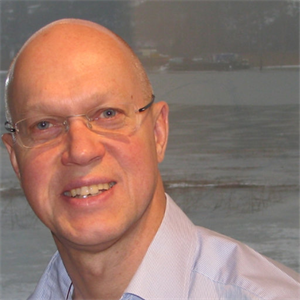
Professor Roland Grafström, based at the Institute of Environmental Medicine, KarolinskaInstitutet, is a renowned toxicologist and innovator in non-animal testing methodologies. With over 200 publications, numerous international partnerships, and leadership roles in EU projects like HARMLESS and RISKHUNT3R, his work focuses on predictive toxicology, omics-driven research, and human cell-based alternatives to animal testing. A three-time award winner, including the prestigious Lush Science Prize (2014), he has supervised 13 Ph.D. candidates and founded companies like Cercon AB and Predictomics AB to bridge research and industry. His patented inventions in toxicogenomics further highlight his commitment to advancing safer, sustainable chemicals and materials testing.