

DECIDE
The DECIDE (Decision-making within cells and differentiation entity therapies) network sought to advance understanding of normal blood cell development and why primitive cells fail to differentiate in acute myeloid leukaemia (AML).
The team has used the information gained to develop ways of alleviating the differentiation block in AML and so deliver new agents, including novel vitamin D and retinoid analogues, for use in differentiation therapy. This type of therapy aims to respond to the urgent need to devise milder treatments, especially for older and frailer AML patients.
The network combined the research efforts of prestigious universities and research institutes, Poland’s leading governmental Pharmaceutical Research Institute, and two successful biopharmaceutical companies. It brought together scientists who have made important advances in the fields of haematopoiesis and differentiation therapy and has had both scientific and therapeutic targets. Partners are from the UK, Switzerland, Poland, Ireland, Israel, Spain, and the USA.
About DECIDE
About DECIDE
The Marie Curie Fellows
DECIDE has trained 12 PhD students. Within the 3 years of their Marie Curie Fellowship. All the Fellows finished their work and were awarded their PhD
A clearer picture of blood cell development
One of our main aims has been to contribute towards a better understanding of blood cell development. Textbooks depict this process as a strict hierarchy. The haematopoietic stem cell (HSC) is the apex, chooses either the myeloid or lymphoid pathway and then becomes more lineage-restricted in a stepwise manner through a series of progenitors (HPC). Our pairwise model is very different. Lineage choices are viewed as a continuum, there aren’t underlying branch points and there are particular relationships between each of the cell lineages, based on the sets of potentials seen for various HPC. Work has shown that HSC and HPC have a strong lineage signature. Early Progenitors with Lymphoid and Myeloid potentials have been viewed as a single population of cells - these cells have now been divided into, at least, 3 groups, with a B cell, dendritic or myeloid genetic signature. HSC sub-populations have been identified that express receptors for different cytokines. The cytokines Flt3 ligand (Flt3L) and IL-7 have been viewed as instructing the development of B cells. By contrast, our work has shown that Flt3L provides a proliferative signal and IL-7 a signal for survival to B cell-committed progenitors. Mesenchymal stromal cells (MSCs) are important for haematopoiesis. Experiments to investigate these cells have been largely conducted in conditions of 20% oxygen. The bone marrow is hypoxic and this changes the secretome of MSC. Additionally, MSC are highly radio-resistant, hypoxia increases radio-resistance and Hif-1a plays a key role.
New anticancer vitamins D
Differentiation therapy for cancer aims to drive cancer cells to become mature cells which then die naturally. Two important differentiating agents are 1a,25-dihydroxyvitamin D3 (1,25D) and all-trans retinoic acid (ATRA). An effective therapeutic dose of 1,25D has been difficult to achieve for the treatment of cancer because it also raises the level of calcium in the blood (calcaemic action), potentially leading to cardiac arrest and coma. A second aim has been to syntheses new analogues of 1,25D that have a substantially reduced calcaemic action. New analogues of 1,25D (an1,25D) have been synthesised that are much less calcaemic and more potent than 1,25D against leukaemia and colon cancer cells. The two new an1,25D are very promising candidates for development as anticancer drugs. They still need to be refined further, to enhance drug delivery. All-trans retinoic acid (ATRA), used with arsenic trioxide, has provided a cure for 95% of patients with acute promyelocytic leukaemia. Attention was focused on whether ATRA can prolong the survival of children with high-risk neuroblastoma. ATRA together with depletion of polyamines (via a polyamine analogue verlindamycin) has been shown to drive terminal differentiation of this cancer and more effectively than either agent alone.
Publications
Prior to finishing the programme, 52 papers were published, a Book entitled “Diversity, Versatility and Leukaemia”, by Brown and Sanchez-Garcia in 2016 and a special issue of a journal relating to the work of DECIDE (and sadly also to commemorate the sudden death of one of our partners Ton Rolink). The Biology and Treatment of Acute Myeloid Leukaemias. (A special issue of the International Journal of Molecular Sciences). Eds: G Brown and E Marcinkowska, June 2017. MDPI, Basel, Switzerland.
A highlight is the paper in the Proceedings of the National Academy of Science, USA describing the roles of Flt3 and IL-7 (doi: 10.1073/pnas.1613316113). Special issues of The Journal of Steroid Biochemistry and Molecular Biology (Proceedings of the 18th Vitamin D Workshop) and The International Journal of Molecular Sciences (in honour of Professor Milan R. Uskokovic) contain a series of research articles on our new an1,25Ds and their activities. The Fellows have presented posters and/or given talks at 30 international and local conferences and attended at total of 42 meetings.
Public outreach
There have been 12 main events for the general public, including the British Festival, Lower Silesia (Poland), Big Bang, Think Corner and Fun Palace Science festivals and a Curing Perfect app which examines the benefits of stem cells.
DECIDE Partners and Colleagues
DECIDE Partners and Colleagues
University of Birmingham - Full Partner
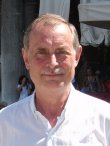
Professor Geoffrey Brown
DECIDE Coordinator and Chair
Email: g.brown@bham.ac.uk
Dr Geoffrey Brown profile
National University of Ireland, Galway - Full Partner
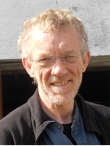
Professor Rhodri Ceredig
DECIDE Director of Training
University of Basel - Full Partner
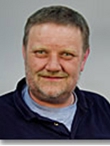
Professor Antonius Rolink
University of Wroclaw - Full Partner
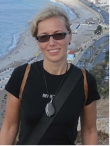
Professor Ewa Marcinkowska
DECIDE Meetings Coordinator
DECIDE Research Director Year 3
Email: ema@cs.uni.wroc.pl
Professor Ewa Marcinkowska's website
Orbsen Therapeutics Ltd, Galway - Full Partner
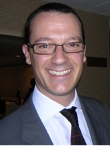
Dr Stephen Elliman
Email: steve.elliman@orbsentherapeutics.com
Orbsen Therapeutics
Institute of Cancer Research, London - Full Partner
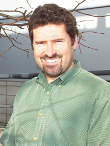
Professor Louis Chesler
Email: louis.chesler@icr.ac.uk
The Pharmaceutical Research Institute, Warsaw - Full Partner
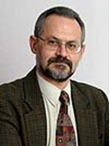
Professor Andrew Kutner
DECIDE Co-Chair
DECIDE Enterprise Director Year 3
Celentyx, Birmingham - Full Partner
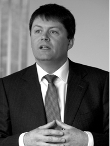
Professor Nicholas Barnes
Email: nicholas.barnes@celentyx.com
Celentyx's website
Rutgers - New Jersey Medical School - Associated Partner
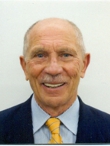
Prof George Studzinski
Professor George Studzinski's profile
High-Point Rendel Ltd. London - Associated Partner
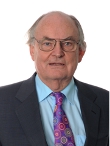
Martin Smith
Ben-Gurion University of the Negev, Israel - Associated Partner
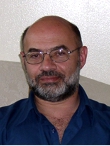
Professor Michael Danilenko
Email: misha@bgu.ac.il
Professor Michael Danilenko's staff profile
University of Chester, UK - Associated Partner
Professor Eustace Johnson
Professor Eustace Johnson's staff profile
University Children's Hospital of Basel and University of Basel - Associated Partner
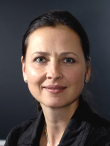
Professor Daniela Finke
Email: daniela.finke@unibas.ch
Professor Daniela Finke's staff profile
Centro de Investigacion del Cancer, University of Salamanca - Associated Partner
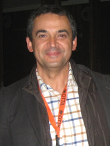
Dr Isidro Sanchez-Garcia
Universidade de Santiago de Compostela - Associated Partner
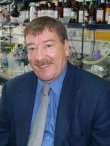
Professor Antonio Mouriño Mosquera
Professor Antonio Mouriño Mosquera's profile
University of Stirling - Associated Partner
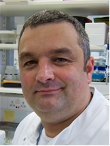
Dr Kevin Petrie
Ethics Leads
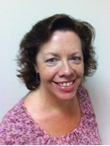
Dr June Jones
DECIDE Tutor: Welfare and Development
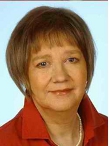
Christiane Neumann
Former Chair of Local Research Ethics Committee, Birmingham
Marie Curie Fellows
Marie Curie Fellows
Overview of DECIDE Training Initiatives
We aimed to develop a cohort of Europe’s best young researchers to be, first and foremost, purposeful thinkers who aspire to solve a major scientific problem who will then translate this new understanding into solutions to un-met medical needs.
The combined effort of university, research institute, and company scientists was central to our two overarching training aims. First, was to ensure that finished Early Stage Researchers are highly skilled analytical scientists - proficient in a variety of technologies and able to cross scientific disciplines. Second, was to ensure that Early Stage Researchers acquire entrepreneurial aspirations coupled to the skills required to work across academia and industry and forge valuable links. Sustainability of this vision was also a focus.
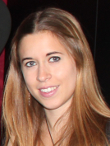
Dr Irene Calvo Asensio - at the National University of Ireland, Galway

Dr Aoife Corcoran- at the University of Wroclaw
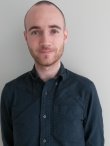
Alan Cunningham - at the University of Birmingham

Dr Laura García Ibáñez - at the University of Birmingham
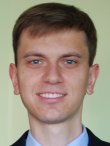
Dr Paweł Kozielewicz - at Celentyx, Birmingham
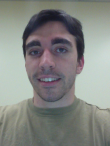
Dr Ciaran Mooney – at the University of Birmingham

Dr Audrey Lilly von Münchow - at the University of Basel

Dr Sharmin Nadkarni - at the Pharmaceutical Research Institute, Warsaw

Dr Bolla Narasimha Rao - at the Pharmaceutical Research Institute, Warsaw
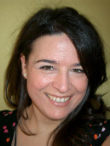
Eva Camarillo Retamosa - at Orbsen Therapeutics Ltd., Galway
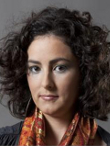
Dr Andreia Ribeiro – at the National University of Ireland, Galway

Dr Llucia Albertí Servera - at the University of Basel
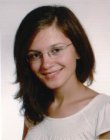
Zuzanna Maria Urban – Working at Institute of Cancer Research, London
Associated Doctoral Researchers
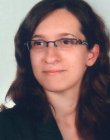
Aleksandra Marchwicka – Working at the Faculty of Biotechnology, University of Wroclaw
Funded by the European Regional Development Fund, Operational Program Innovative Economy, 1.1.2 (POIG 01.01.02-02-003/08-00)

Idoia García-Ramírez – Instituto de Biología Molecular y Celular del Cáncer (IBMCC).
Funded by Ministerio de Economía y Competitividad. Gobierno de España.

Alberto Martín-Lorenzo – Working at Instituto de Biología Molecular y Celular del Cáncer (IBMCC)
Funded by FSE-Conserjería de Educación de la Junta de Castilla y León (CSI001-13).
DECIDE Advisory Panel
DECIDE Advisory Panel
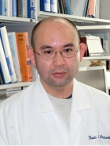
Professor Motonari Kondo, M.D., Ph.D.
Department of Molecular Immunology
Toho University School of Medicine
5-21-16 Omori-Nishi
Ota-ku, Tokyo 143-8540
Japan
Clarification of regulatory mechanisms in lymphocyte development
All classes of blood cells are derived from bone marrow resident hematopoietic stem cells (HSCs) in adults. Hematopoietic cells can be broadly separated into two major lineages: the lymphoid lineage and the myeloid lineage. Dr. Kondo’s research mainly focuses on how lymphoid lineage specification and commitment are regulated in HSCs and/or hematopoietic multipotent progenitors (MPPs). Dr. Kondo’s laboratory is also investigating roles of cytokines in lymphocyte development and function. Finally, Dr. Kondo has started to elucidate the genes required for functional T cell formation to get insights into T cell specific gene networks. Results of the research in Dr. Kondo’s laboratory would help to understand not only the normal lymphocyte development process but also abnormal lymphocyte development, which may lead to immunodeficiency, autoimmune disease, or leukemia/lymphoma.
Professor Tom Taghon
Department of Clinical Chemistry, Microbiology and Immunology
Ghent University
De Pintelaan 185
4 Blok A
9000 Gent
Phone +32 9 332 01 33/36 58
Mobile +32 471 99 44 84
Fax +32 9 332 36 59
Email: tom.taghon@ugent.be
Contact us
Professor Geoffrey Brown - DECIDE Coordinator and Chair
School of Infection, Inflammation and Immunology, University of Birmingham
Email: g.brown@bham.ac.uk
Tel: +44 (0)121 414 4082
Fax: +44 (0)121 414 3599
