

Genomics Birmingham
Genomics Birmingham provides expert genomic, transcriptomic, epigenetic and some proteomic based services, along with a Technology Suite for researcher access. Our specialist team pursue excellence, while incorporating the latest technological developments.
Genomics Birmingham comprises a specialist team using the latest genomic technologies to support genomic, transcriptomic and epigenetic based research. The service was founded in 2016 and is housed over three purpose-built laboratories, in a fully equipped facility, largely funded through University of Birmingham and the MRC. We provide a trusted service supporting experimental design, as well as sample processing. Projects are focused towards University of Birmingham researchers, but we welcome collaboration with external academics and commercial businesses.
Genomics Birmingham Team
Genomics Birmingham Team

Genomics Specialist
Claire Bryer, BSc (Hons)
Claire studied Biological Sciences (Genetics) at University of Birmingham, graduating in 2010. Her first position was working in the Department of Biochemistry (University of Oxford) as a technician, learning fundamental molecular biology techniques using S. pombe. She then moved on to the Genomics core facility (OGC) at Oxford University (2014-2017). This provided a solid foundation for her next role as a CRUK-funded Genomics Scientist within Genomics Birmingham at UoB (2017-2021). Claire then expanded her skills within an industrial setting, working as a Senior Automation Scientist at Nonacus Ltd (2021-2024), and implemented a COVID-19 sequencing service. She has become a genomic assay development and automation specialist with expertise in: RNAseq, WGS, WES, amplicon, single-cell, and ATAC-seq. Claire brings her substantial technical skill and accumulated knowledge back to Genomics Birmingham, UoB (from Dec 2024) with a focus on single-cell technology.
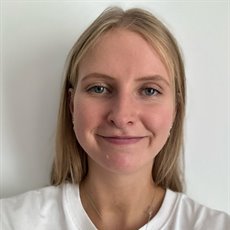
Genomics Specialist
Kate Carruthers, MBiomed
Kate studied Biomedical Science at Cardiff University and was awarded an integrated masters degree in 2019. Her masters project focussed on investigating the effects of external influences on gene expression in the development of osteoarthritis. Kate then worked in the West Midlands Regional Genetics Laboratories, processing clinical samples for genetic analysis by performing next generation sequencing techniques. Kate joined the Genomics Birmingham team in 2023 to use and expand her skills in NGS technologies.

Senior Research Technician
Faileigh Harriott
Faileigh completed a Level 5 apprenticeship in 2021 as part of her role in the Medical School teaching laboratories. She supported all laboratory practical sessions for Biomedical Science and Pharmacy. In 2021 she joined the Open University part time to complete her Bsc Biology degree, whilst continuing to work in the teaching laboratories and taking on a responsibility to mentor new apprentices joining the team. She joined the Genomics Birmingham team in 2023 as part of her aim to develop her career on the area while completing further studies.

Senior Research Technician
Mahema Khan
Mahema studied a Bachelor of Science in Biochemistry at University of Birmingham. Following graduation, she undertook a research placement at the Babraham Institute where she explored the expression of non-canonically imprinted genes in mice. She worked as a research assistant at the Wellcome Sanger Institute supporting research in somatic genomics and cancer. During her time at Sanger, she completed a visiting placement at the Milner Therapeutics Institute where she gained experience in pooled CRISPR screening and spatial biology techniques. Mahema joined Genomics Birmingham in 2026 to expand her skillset in genomic technologies.

Senior Research Technician
Jessica Neil
Jessica completed a BSc (Hons) in Biological Sciences (Genetics), followed by an MSc in Genomic Medicine in 2025, at the University of Birmingham. Her MSc research project was published in Bladder Cancer, where she focused on developing an extended version of the GALEAS bladder gene panel to detect FGFR3 fusions in bladder cancer patients. Following her studies, she worked in a Containment Level 3 laboratory, developing a qPCR-assay for the detection of Shiga toxin-producing E. coli in food and water samples. Jessica has since joined the Genomics Birmingham team to further expand her genomics knowledge.

Senior Research Technician
Kamila Orzechowska, BSc (Hons), MSc
Kamila has a BSc in Biological and Chemical Sciences in 2021 from Coventry University and an MSc in Molecular Biotechnology in 2022 from University of Birmingham. She was awarded “The Olly Beswetherick Prize in Molecular Biotechnology” for the best research project during her MSc. While working at ALS Environmental she gained experience in water samples microbial analysis. She joined the Beggs Group in February 2023 and recently she has joined the Genomics Birmingham Team.

Senior Research Technician
Ross Worledge, BSc (Hons), MRes
Ross studied Biomedical Science at Aston University. This included NIHR placements in 2020/21, based at Wolverhampton University, researching Crohn’s disease and IBD and at the Wellcome Trust Birmingham Clinical Research Facility working predominantly on processing samples for COVID-19 vaccine trials. Ross also obtained a MRes at Aston, where he researched the effect of vesicles on the immune system and the regulation of inflammation. He joined the Genomics Birmingham team to expand his skillset and ability.

Facility Manager
Dr Samantha Tull
Dr Samantha Tull is the facility manager of the newly expanded Genomic Birmingham (October 2023). She obtained a BSc (Hons) in Bioanalytical Sciences, a MSc in Experimental and Molecular Pathology and a PhD in Cardiovascular Sciences. During her time at UoB, she obtained PCAP (associated fellow) qualification. Her research was based at the University of Leicester, then here at UoB and at Viatem Ltd (a UoB spin out company). Samantha has published first, last and middle author research papers in the fields of cardiovascular, IBD and renal inflammatory disease. The team will continue to bring genomic research to life for their clients/users.
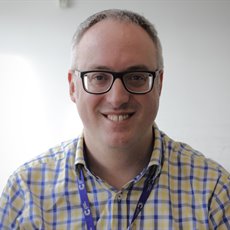
Genomics Birmingham Academic Lead
Professor Andrew Beggs
Training and Support
Training and Support
We provide training and support for users to independently use all our available equipment available in Stratocore. Currently, our training programmes are divided into two sections. Firstly, the CANVAS Module which can be completed at the user's pace and once that is completed we deliver an in person training session at the equipment. If you require training just request it in Stratocore.
We deliver sessions regularly. For our bespoke services, please reach out to us to discuss your project and how we can help you.
Equipment Access
Equipment Access
External users are encouraged to contact us via email in the first instance, however, all internal prospective users will need to request an account on the core facilities booking system Stratocore (unless you already have one). Please ensure you use your UoB email address to register your Stratocore account.
As part of your account, you will need a valid finance/grant code. We need this to be able to charge you for your use of the equipment. Your code will either be a project or a general ledger. Guidance on finance/grant codes is here:
Project Ledger
(Project Finance Number begins with a ‘1’ or ‘2’). Project Ledger codes require 3 components in the format:
Project Ledger Code Components
| Cost Centre Code | Task Number | Project Finance Number |
|---|---|---|
| C082 | 1.1 | 21991 |
General Ledger. (Project Finance Number begins with a ‘6’). General Ledgers require 2 components in the format:
General Ledger Code Components
| Cost Centre Code | Project Finance Number |
|---|---|
| C283 |
65371 |

Equipment access via Stratocore
- ThermoFisher/Applied Biosystems QS5 384 and QS5 96-well plate RT-PCR systems
- CellRad – cell irradiator
Both require training to prior use, request via Stratocore.
Genomic services
Genomic services
- DNA/RNA quantification and fragment length assessment using the Qubit Fluorometer and Tapestation
- Next generation sequencing on Illumina MiSeq, NextSeq 2000 and NovaSeq 6000
- Library prep and next generation sequencing on the Ion Torrent Genexus Integrated Sequencer
- NGS library preparation covering a wide range of RNAseq/DNAseq applications including low input and FFPE samples
- Single cell technologies including 3’/5' transcript profiling, V(D)J, ATAC, fixed cell, multiome and spatial transcriptomics
- Oxford Nanopore sequencing using the PromethION platform for long read RNA/DNA sequencing and methylation detection
- Project planning and writing grant application quotes
- Sample processing advice
Olink Proteomic services
Olink Proteomic services
Olink Proteomic Services Genomics Birmingham provides end-to-end Olink proteomic services across the Target 48, Target 96, Reveal and Explore HT platforms. These assays utilise Olink's Proximity Extension Assay (PEA) technology to enable highly sensitive and specific multiplex protein analysis from minimal sample volumes. Applications range from targeted biomarker validation to large-scale discovery proteomics. Services are available for a range of sample types including serum, plasma, saliva, tissue culture supernatants and synovial fluid.
- Target 48 and Target 96 proteomic analyses using the Signature Q100 microfluidic qPCR system. Service launched in early 2024.
- Reveal measures approximately 1,000 proteins in up to 86 samples. Libraries are sequenced on the Illumina NextSeq 2000 platform. Service launched in autumn 2025.
- Explore HT measures approximately 5,400 proteins in up to 172 samples. Sample preparation is supported by Dragonfly, FAST and Hamilton STARlet robotic platforms, with sequencing performed on the Illumina NovaSeq platform. Service launched in spring 2026.
Acknowledgement Statement
Acknowledgement Statement
The University of Birmingham (UoB) is a founding signatory of ‘The Technician Commitment’. A sector-wide, collaborative initiative that aims to ensure visibility, recognition, career development and sustainability for technical staff working in higher education and research, across all disciplines.
The UoB has invested in and supports the Technology Hub facilities not only with equipment but also with specialist staff. The staff are a key element of our offering, as they ensure that all equipment is looked after and performing to specification. Their significant experience and valuable input and advice are also beneficial to our users.
In line with this, the Technology Hub Facilities request that all users of the facilities recognise its contribution to manuscripts in one of the following ways:
The authors would like to acknowledge the (Facility) at the UoB for support of (technology used) experiments. The authors would like to acknowledge (specialist name).
In some instances, the specialist may make substantial contributions to the conception / design of the work or the acquisition, analysis, or interpretation of data for a manuscript. In this case, it is expected that this is appropriately recognised through co-authorship on any publications resulting from the work. Criteria for inclusion of a specialist as an author on a publication. Where the specialist has either:
- Performed experiments or analysis, the data from which is included in the manuscript.
- Produced customised analysis workflows or scripts for the work.
- Significantly contributed to the design, conception, or interpretation of the experiments.
Publications
Publications
1 - Goel, A., Ward, D.G., Noyvert, B. et al. Combined exome and transcriptome sequencing of non-muscle-invasive bladder cancer: associations between genomic changes, expression subtypes, and clinical outcomes. Genome Med 14, 59 (2022). https://doi.org/10.1186/s13073-022-01056-4
2 - Kidd, S. P., Burns, D., Armson, B., Beggs, A. D., Howson, E. L., Williams, A., ... & Fowler, V. L. (2022). RT-LAMP has high accuracy for detecting SARS-CoV-2 in saliva and naso/oropharyngeal swabs from asymptomatic and symptomatic individuals. medRxiv, 2021-06.
3 - Sirinukunwattana K, Domingo E, Richman SD On behalf of S:CORT consortium, et al. Image-based consensus molecular subtype (imCMS) classification of colorectal cancer using deep learning. Gut 2021;70:544-554.
4 - Ptasinska, A., Whalley, C., Bosworth, A., Poxon, C., Bryer, C., Machin, N., ... & Beggs, A. D. (2021). Diagnostic accuracy of loop-mediated isothermal amplification coupled to nanopore sequencing (LamPORE) for the detection of SARS-CoV-2 infection at scale in symptomatic and asymptomatic populations. Clinical microbiology and infection, 27(9), 1348-eKidd
5 - Dependence on Myb expression is attenuated in myeloid leukaemia with N-terminal CEBPA mutations. Giacomo Volpe, Pierre Cauchy, David S Walton, Carl Ward, Daniel Blakemore, Rachael Bayley, Mary L Clarke, Luisa Schmidt, Claus Nerlov, Paloma Garcia, Stephanie Dumon, Florian Grebien, Jon Frampton. Life Science Alliance. Published Online: 15 March, 2019. http://doi.org/10.26508/lsa.201800207
6 - Genomic and transcriptomic characterisation of undifferentiated pleomorphic sarcoma of bone. Naser M Ali, Stefania Niada, Anna T Brini, Mark R Morris, Sathishkumar Kurusamy, Abdullah Alholle, David Huen, Cristina R Antonescu, Franck Tirode, Vaiyapuri Sumathi, Farida Latif. Journal of Pathology. 2019;247:166–176 https://doi.org/10.1002/path.5176
7 - Global long terminal repeat activation participates in establishing the unique gene expression programme of classical Hodgkin lymphoma. Benjamin Edginton-White, Pierre Cauchy, Salam A. Assi, Sylvia Hartmann, Arthur G. Riggs, Stephan Mathas, Peter N. Cockerill, Constanze Bonifer. Lymphoma. Published online 13 December 2018. https://www.nature.com/articles/s41375-018-0311-x
8 - The Co-operation of RUNX1 with LDB1, CDK9 and BRD4 Drives Transcription Factor Complex Relocation During Haematopoietic Specification. Jane Gilmour, Salam A. Assi, Laura Noailles, Monika Lichtinger, Nadine Obier & Constanze Bonifer. Nature. 2018 July. https://doi.org/10.1038/s41598-018-28506-7
9 - C/EBPα overrides epigenetic reprogramming by oncogenic transcription factors in acute myeloid leukemia. Loke J, Chin PS, Keane P, Pickin A, Assi SA, Ptasinska A, Imperato MR, Cockerill PN, Bonifer C. Blood Adv. 2018 Feb 13;2(3):271-284. https://doi.org/10.1182/bloodadvances.2017012781
Equipment

NextSeq 2000

Olink Signature q100

Genexus

Explore - Dragonfly and FAST liquid handlers

Explore - Dragonfly only

Equipment Tab -qPCR machines
Contact us
All general enquiries to Genomics Birmingham should be directed to:
Telephone: +44 (0)121 415 8139
Email: cmh-sequencing@contacts.bham.ac.uk
Facility Manager
Dr Samantha Tull
Email: s.p.tull@bham.ac.uk
Genomics Birmingham Academic Lead
Professor Andrew Beggs
Email: a.beggs@bham.ac.uk
Senior Research Technician
Mahema Khan
Email: m.khan.17@bham.ac.uk
Social media
Follow the Genomics Birmingham UOB LinkedIn page