
News and events from the Global Health Project team
Recent news
Recent news
Exploring palliative care in humanitarian crises: moral and practical dimensions
Professor Lisa Schwartz and Dr Sonya DeLaat from McMaster University visited us on 27th May 2025. We gathered researchers, academics, clinicians, and students to explore palliative care in humanitarian crises through key stakeholder workshop, masterclass, and case study discussion. These activities were organised by Dr Ping Guo and Dr Nikolaos Efstathiou from the Department of Nursing and Midwifery at the University of Birmingham. They were funded by BIRMAC seed fund - a partnership between the University of Birmingham and McMaster University aimed to share expertise and experience to work collaboratively in a global health context.
Reflection from Neelima Kukreti, our student on MRes Clinical Health Research programme
"As someone relatively new to the field of palliative care, this masterclass was truly eye-opening. It expanded my understanding of the ethical and practical complexities involved in delivering palliative care amid humanitarian crises. The session began with two esteemed speakers & Professor Lisa Schwartz, renowned globally for her work in healthcare ethics and humanitarian health, and Dr. Sonya de Laat, who brought valuable insights from anthropology, media, and global health. Together, they brought forward expert perspectives on the challenges of providing care to patients with palliative needs in extremely difficult circumstances, such as limited medical infrastructure, cultural barriers, and moral dilemmas."
They also discussed the difficult reality faced by patients nearing the end of life, whose families sometimes choose to take them home due to inadequate institutional support & revealing a need for strong community-based support and care for the end-of-life patients. One particularly moving example was that of the "Good Samaritan": a refugee who volunteered to care for others despite leaving his own emotional and psychological challenges unaddressed. This story prompted a deep personal reflection; does such service empower and provide purpose, or does it risk overwhelming already vulnerable individuals? These are difficult ethical questions that require ongoing reflection and research. The lack of support for individuals in crisis situations resonated with me emotionally and intellectually, raising awareness of the psychological burdens they carry.
Following the presentations, we engaged in a roundtable discussion featuring a variety of case studies, including patients with deteriorating health, earthquake injuries, late-stage cancer, and neonatal complications. We were divided into groups to analyze and present our assigned cases, which was both challenging and enriching. While some participants strongly advocated for humanitarian palliative care, others questioned its feasibility and cultural appropriateness in certain settings.
What stood out most was the inclusive and respectful environment of the workshop. All contributions; whether from students, researchers, or professionals were welcomed and valued. This fostered a space of curiosity, critical thinking, and moral engagement. Despite differences in opinion, we were united in our commitment to think ethically and empathetically. The session left us with many questions, but perhaps this is a key part of learning; a necessary step toward developing more compassionate and inclusive healthcare responses in humanitarian contexts.
We sincerely acknowledge and thank Professor Lisa Schwartz, Dr. Sonya de Laat, Dr. Ping Guo, and Dr. Nikolaos Efstathiou for providing invaluable insights into this important and compassionate issue, and for guiding us through the ethical complexities of palliative care in humanitarian crises.
Reflection on case study discussion from Nattaporn Ontrakrai, our PhD student
The workshop on 27th May was more than just an academic exercise. It was a space for introspection, ethical reflection, and shared humanity. It invited us to engage with the difficult decisions that often accompany the care of patients receiving palliative care, particularly in settings where resources are limited.
As a healthcare professional with prior experience as a paediatric nurse in a tertiary hospital, the discussions prompted me to reflect on situations I had encountered the similar situation in clinical practice. Several of the case studies presented closely resembled real-life scenarios in which I was required to make decisions under ethically complex and emotionally challenging circumstances. In many of those situations, no definitive answers could be found. What we could do was to make a sincere effort to arrive at decisions that were ethically sound and served the best interests of everyone involved.
I found the scenarios in this workshop really thought-provoking. The cases were interesting, relevant, and made me reflect on many aspects of care. I was truly impressed by how the workshop encouraged critical thinking without ever feeling abstract or detached from practice. What I appreciated most was the opportunity to explore these situations together from different perspectives. The group discussions created a space where various viewpoints could be shared, which helped me to better understand the complexity of each case. I believe that this kind of exchange is valuable in helping us consider how to respond with both compassion and ethical awareness.
We jointly held the case study workshop with colleagues and students at McMaster University when Dr Ping Guo and Dr Nikolaos Efstathiou visited McMaster University in October 2025. Their students shared reflections on the impactful events. Please find more information via the McMaster University website.
Education and Innovation Showcase: Tree of Life Methodology used in Therapeutic Nursing
Dr Yvette Brown from the School of Nursing and Midwifery discusses the Tree of Life methodology used in the Therapeutic Nursing (TN) module, for mental health student nurses.
In May 2023, the Tree of Life Methodology (TOL), a trauma-informed approach originating from Zimbabwe, was integrated into the curriculum. Students enthusiastically embraced it, drawing their own trees representing various life aspects.
Watch the video to learn more about the Tree of Life methodology used in the Therapeutic Nursing module.
If you have any queries regarding the group, please contact Dr Yvette Brown.
Care for people with fractures from falls could improve after supplement of studies published
Healthcare for those who suffer fragility fractures will benefit following a special supplement published highlighting innovative approaches.
Under the leadership of Dr Emma Sutton, the special supplement of 12 papers has been published in BMJ Open Quality, in collaboration with the Fragility Fracture Network (FFN), on quality improvement initiatives in healthcare improvement for fragility fracture (fractures caused by a fall from a standing height or less) patients.
Conferences
Conferences
Visit to University of Airlangga, June 2024, Surabaya, Indonesia
Dr Chris Wagstaff was invited to the University of Airlangga in Surabaya, Indonesia in the first steps of what will be a long and fruitful working relationship.
Maybe the first thing to underline is the ambition of the University. In the centre of campus there is a ‘statue’ of the University’s position in the world ranking. Currently they are #308, & they change the statue everything they move up the rankings (they have never moved down). There are posters all over campus reminding visitors & students that the university is in the top 4 in Indonesia & ‘The Most Improved University in Asia’.
The conference was the 15th International Nursing Conference. Interestingly all PhD students in the school have to present every year & Masters students have to present once. They had speakers from Egypt, Japan, Thailand, Australia, Malaysia & the UK. Chris had the privilege/ disadvantage of delivering the first paper of the conference, ‘The digitalization of mental health services’. The paper seems to be have been well received.
The underlying purpose of the visit was to discuss the future working relations between the universities; there are six potential work streams covering both teaching and research. As hosts the University of Airlangga were incredibly hospitable, and were keen that Chris should be returning.
Please contact Chris if you have any questions.


European Association for Palliative Care (EAPC) 13th World Research Congress, 16-18 May 2024, Barcelona, Spain
Nine projects were presented and well received at the EAPC 13th World Research Congress in Barcelona. We had two oral presentations, one poster discussion, one printed poster, and five e-posters from the palliative care research team, which attracted attention and great discussion. Our international students Hao Liu and Piyatida Theppradit presented their excellent PhD work at the conference.


U21 Health Sciences Nursing and Midwifery Group Research Postgraduate Symposium - 5th March 2024
Three PhD students from the Global Health Project Team presented their research at the U21 Health Sciences Nursing and Midwifery Group Research Postgraduate Symposium 2024 which was held by the University of Hong Kong on 5th March 2024.


Congratulations to one of our three students, Ms Piyatida Theppradit, who had won the outstanding presentation award.

International visits
International visits
Dr Vyshna Ravindran
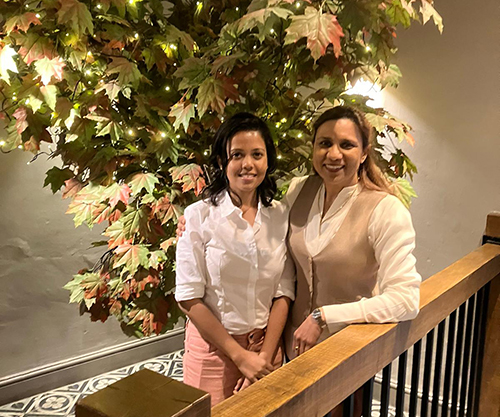
Dr Vyshna Ravindran is currently here as a Visiting Research Fellow at the University of Birmingham, funded by India Institute. She has been honoured with the prestigious Women in Research Fellowship Award. Under the expert guidance of Dr Kanta Kumar, leading research in health inequalities in the UK in rheumatology and people living with chronic diseases, the wider team comprising seasoned researchers and clinicians. Among them are Professor Sheila Greenfield and Dr. Laura Kudrna from the University of Birmingham, Dr Rajeev Gupta from the University of Sheffield, and Professor Sunil Bhandari from Hull University Teaching Hospital, UK.
As chronic diseases rise, it's crucial to tackle their burden and meet the 2030 Agenda for Sustainable Development by exploring other treatment avenues. Not all patients respond to conventional medicine, prompting the need for alternative options. With Ayurveda gaining traction among UK patients, it presents a competitive alternative. Yet, healthcare professionals' perspectives on Complementary Medicine remain unknown.
Our groundbreaking research initiative seeks to delve into the awareness, attitudes, and practices of healthcare providers concerning Ayurvedic medicine in the management of chronic diseases, through a comprehensive cross-sectional survey tailored to the British context. This endeavour stands as a pioneering effort not just within the UK but across the entirety of Europe.
The anticipated outcomes of this survey hold immense potential to stimulate robust discussions surrounding Ayurveda's role in chronic disease management, thereby fostering collaborative synergies between allopathic and Ayurvedic practitioners, funders, researchers, clinicians and policy makers.
Professor Sandra Pillon and Dr Chris Wagstaff

Prior to Chris travelling to Brazil, Sandra had supervised MSc student Sarah Foster in the data collection phase of her HSCE project investigating Craving/ Impulsivity/ Depression/Sexual behaviour amongst people who use illicit substances. When in the UK, Sandra was a joint supervisor for Sarah and the two other students, who have now submitted their three respective dissertations.


Two of those dissertations will be converted into submissions for international peer reviewed journals, and an abstract has been accepted at the European Conference Mental Health.
Between the two trips we have written two book chapters, both have been reviewed, accepted and are now in different stages of publication. One looking at the use of psychotropic medication with Brazilian youth and one discussing drug use in the over 50 Brazilian population.
Prof Pillon has also given input to one of my MRes students whose dissertation is investigating the experiences of drug use in the over 50s population in Birmingham. We have started to write up two intertwined studies investigating both the attitudes of Health Professionals towards suicide risk in hospitals and primary care centres.
Within that study there is a second study looking at the suicide statistics in emergency departments. My PhD student Ashwaq is involved in the writing up of this study where there are some interesting findings about suicide in the over 40s. We have submitted two grant applications:
Substance use in indigenous communities. Grant application made with CAPES, in the International congress workstream. This is a joint application with the University of Mato Grosso.
We have also submitted an application to investigate depression and substance use in the Quilombola communities (black population of African descent), with the Federal University of Goiás (UFGO). The population is socially excluded & low social determinants of health.
We have submitted papers to Portuguese Journal of mental health, Health Sciences, Nursing & Health Sciences, Drugs: Education, Prevention and Policy, and Journal of addiction Nursing. These papers are working their way through the publication systems. We have had one paper published in the last seven months in the Journal of Transgender Health.
We are making plans for five students to travel to Brazil in the autumn, to work on two HSCE projects – one investigating substance use and social support and one investigating the risks for children who work on the street.
For the latter project we are applying for UBBI seed funding, with the application due in mid-July.
Our five-year study looking at suicide among Brazilian high school students has now started and will complete in 2029.
Finally, we have had Luana over as an exchange student from USP, whom both Sandra and I have supported.