
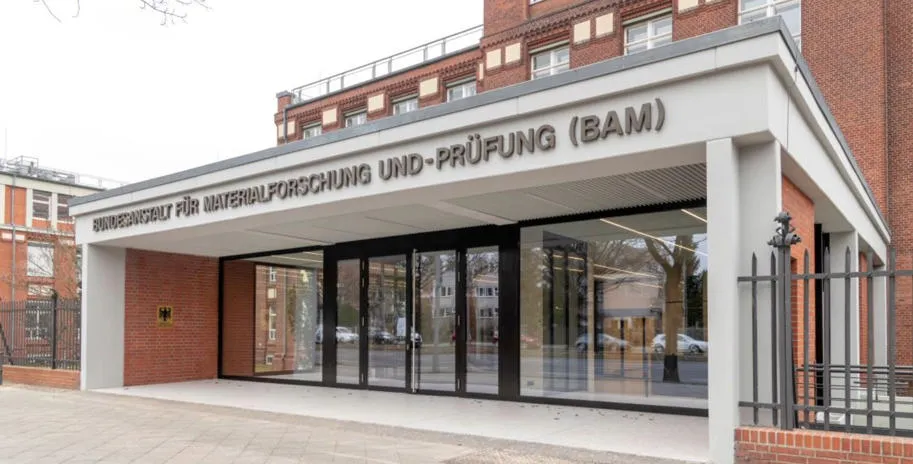
Federal Institute for Materials Research and Testing (BAM)
BAM is a senior scientific and technical federal institute with responsibility to the Federal Ministry for Economic Affairs and Energy in Germany. It provides testing, analysis, research and advice to protect people, the environment, and material goods. Our partnership places science and innovation at the heart of our bilateral relations and highlights the value of sustained, strategic collaboration. Since its launch in 2018, BAM and the University of Birmingham have been bringing together researchers, students, and staff to address shared challenges and deliver meaningful outcomes.
Research
Chemistry and Materials
Chemistry and Materials
Collaboration Summary
Our partnership has cultivated a vibrant research environment through shared experiments, joint publications, and a series of collaborative workshops and academic visits. These activities have strengthened international ties and fostered interdisciplinary dialogue, including landmark events such as a synchrotron workshop in Brazil. A key highlight of our collaboration has been the exchange of doctoral and undergraduate students, with six co-funded PhD exchanges since 2020, and the exchange of over 20 undergraduate students who have undertaken summer internships at BAM.
Research Interests
- Mechanochemistry and sustainable chemistry
- Molecular and inorganic materials for energy applications, sensing, storage, and catalysis
- Nanomaterials: preparation, characterisation, and applications
- Critical materials
- Advanced Materials
Theme Leads
Dr Adam Michalchuk (University of Birmingham) and Dr Jens Riedel (BAM)
"This partnership has allowed us to combine our institutions’ complementary expertise and infrastructure to address leading questions in the chemistry of sustainable and energy technologies. Together we have built a collaborative network spanning the fields of mechanochemistry, sustainable chemistry, and the chemistry of materials for energy, sensing, and catalysis. Our interdisciplinary network has developed distinctive expertise in the study of critical materials and the safety of nanomaterials. Each of these areas has benefited from our shared infrastructure and perspectives, enabling world-leading science."
Energy
Energy
Collaboration Summary
The Energy theme has developed into a robust and multifaceted collaboration, marked by joint experimental work, shared funding successes, and a wide range of academic exchanges. Researchers have come together through numerous workshops, seminars, and bilateral visits, fostering a strong network of expertise. The partnership also includes participation in international training events, such as the Hydrogen Safety Summer School in Athens. Focusing on joint expertise, this theme highlights the depth and continuity of collaborative efforts across institutions and people.
Research Interests
- Research on hydrogen and its derivatives: safety, materials, components, storage, mobility and processes
- Safety in nuclear waste management: packages and nuclear waste disposal
- Battery research: safety, materials, and recycling
- Wind energy converters: materials, structural reliability, and safety
- Storage containers and dangerous goods packaging: safety, materials, components, processes, and recycling
Theme Leads
Prof. Robert Steinberger-Wilckens (University of Birmingham) and Dr Finn Lückoff (BAM)
"Our collaboration bridges cutting-edge energy conversion and storage research with real-world applications - from battery recycling to hydrogen safety training- ensuring our science delivers impact across academia and industry."
Materials Engineering and Additive Manufacturing
Materials Engineering and Additive Manufacturing
Collaboration Summary
This theme brings together UoB-BAM researchers exploring the future of how things are made, from advanced materials to innovative manufacturing methods. The collaboration has grown through experimentation, shared research goals, and a strong culture of academic exchange. Beyond the lab, the partnership has sparked new ideas for sustainable design, digital fabrication, and industrial transformation. It continues to evolve as a space where practical challenges inspire scientific discovery and deepen cross-national collaboration.
Research Interests
- Additive Manufacturing (AM) in space and for space applications
- AM for stainless steels, superalloys, refractory and noble metals, including copper
- Laser-melting for the fully automated generation of new alloys
- AM lattice structures and metamaterials
- High temperature testing of AM materials
- Ceramic technology (nanomaterials and AM)
- Artificial Intelligence (AI) in AM
- AM for hydrogen applications
- X ray-based Non-Destructive Testing
Theme Leads
Dr Yuanbo T Tang (University of Birmingham) and Dr Alex Evans (BAM)
"Working collaboratively has enabled us to push the boundaries of additive manufacturing (AM). From processing new alloys to advanced characterisation, we are creating real opportunities for innovation in energy, aerospace, and biomedical applications."
Civil Engineering
Civil Engineering
Collaboration Summary
We are collaborating to advance innovation in civil engineering through joint research and co-funded PhD projects, exploring opportunities in areas such as:
- multifunctional concrete to extend infrastructure lifespan
- the use of dark fibres to monitor soil-structure interaction for buried asset condition assessment
- acoustic emission sensing for concrete health.
Through these initiatives we aim to shape more sustainable, resilient, and intelligent infrastructure solutions.
Research Interests
- Infrastructure safety and testing
- Non-destructive testing (NDT) and sensing
- Optical fibre monitoring/sensing
- Geophysics
- Structural health monitoring (SHM)
- Geotechnical engineering
- Structural resilience
Theme Lead
Prof. Nicole Metje (University of Birmingham)
"By combining our strengths in sensing, monitoring, and sustainable construction, we're developing innovative solutions that enhance the value, safety, resilience, and sustainability of future infrastructure"
Chemicals and Nanomaterials in the Environment
Chemicals and Nanomaterials in the Environment
Theme Leads:
Professor Francis Pope, University of Birmingham
Research interests:
- Nano-toxicology, nanomaterials and microplastics
- Toxicology of small molecules, including PFAS/POPs and biocides
- Air pollution and air quality, including in indoor spaces and at indoor/outdoor interfaces
Sustainability
Sustainability
Theme Leads:
Birmingham Institute for Sustainability and Climate Action, University of Birmingham
Research interests:
- “Recycled materials”: from construction to decommissioning
- Circular economy & Critical Materials
- Policy at the chemistry, materials and sustainability nexus
Microorganisms in the Environment
Microorganisms in the Environment
Theme Leads:
Professor Artemis Stamboulis, University of Birmingham
Research interests:
- Bacterial growth in the material world
- Antimicrobial resistance and antimicrobial properties of materials
- Biocorrosion, Modelling of biodeterioration/biocorrosion processes
- Cultural heritage
Research Spotlight
STOP project (Surface Transfer of Pathogens)
More about the STOP projectProf. Artemis Stamboulis, University of Birmingham Dr Frank Schreiber, BAM
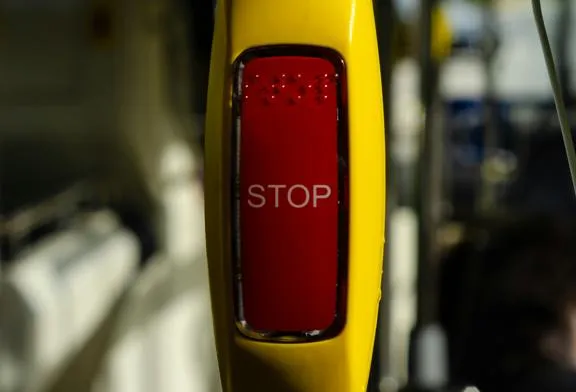
The STOP project, co-led by BAM and University of Birmingham, brings together 15 partners from academia and industry to tackle pathogen transmission on surfaces. STOP seeks to develop a new generation of antimicrobial agents that can be deployed on surfaces to reduce the likelihood of bacteria or viruses being transmitted between people. This is particularly important for surfaces that are touched by many people (such as holds or buttons in public transport vehicles) or surfaces used by vulnerable populations. With a budget of €4.3 million (EU-funded), the project combines cutting-edge material science with real-world applications in healthcare, transport and public infrastructure. Industrial partners are actively involved in translating research into practical solutions, making STOP a model approach for science-driven societal impact.
Education
Since 2018, BAM and the University of Birmingham have brought together researchers, students and staff to address shared challenges. Education is a key strength of the partnership: 14 PhD candidates have been trained through joint programmes, and 23 Chemistry undergraduates have been placed in BAM labs.
Our joint 3.5-year PhD projects are aligned with the partnership's thematic areas of Chemistry and Materials, Energy, and Additive Manufacturing. Students typically spend the first 21 months at Birmingham, then move to BAM in Berlin for the rest of their PhD. They receive training and support from both institutions and graduate with a PhD from Birmingham.

Education Spotlight
Early Career Researchers
“In my PhD thesis, I described my time living in Berlin and working at BAM as the most enjoyable two years of my life and I truly believe that. During my time at BAM, I had the opportunity to access state-of-the-art equipment and equally fantastic facilities, such as the BAMline at BESSY II, which enabled me to perform some of the experiments that I am perhaps the proudest of. I feel that both my scientific and professional development were even further enhanced by the diverse network of colleagues and collaborators that I met during my time at BAM, many of whom I am happy to call friends. Living in Berlin itself was equally enriching. The city has a vibrant culture, rich history and the unique blend of neighbourhoods is something that I had never experienced before and created an engaging environment where there was rarely a dull week.”
PhD Student Joseph Okeke
Work with us
In the next chapter of our partnership, we will boost our engagement with stakeholders and institutions across academia, industry, and the public sector who share our commitment to advancing research and innovation. Whether you are exploring joint projects, knowledge exchange, or new technologies, we'd be delighted to hear from you.
Institutional Strategic Leads:
- Professor Tim Albrecht, University of Birmingham, Professor of Physical Chemistry, Director of Global Engagement, College of Engineering and Physical Sciences | t.albrecht@bham.ac.uk
- Dr Claudia Eggert, Bundesanstalt für Materialforschung und -prüfung, Member of the Presidential Board, Research Coordination and Transfer, Young Scientists | Claudia.eggert@bam.de
Partnership Managers:
- Konstantin Kamma, University of Birmingham, International Partnerships Manager | k.kamma@bham.ac.uk
- Britta Schumacher, Bundesanstalt für Materialforschung und -prüfung, International Partnerships Manager | britta.schumacher@bam.de