Sci:Art Perspectives was a cross-institute public involvement and engagement project between the University of Birmingham (UoB) and the Medical Research Council Laboratory of Medical Sciences (MRC LMS). The project has been supported through Wellcome Trust funding awarded to LMS Director, Professor Wiebke Arlt and Assistant Professor of Patient and Public Involvement and Engagement, Dr Caroline Gillett (UoB).
Dr Caroline Gillett (UoB), who has a passion and background in fusing arts and science, devised the project plan in close collaboration with Cadence Ong (placement student from Imperial College London) and Dr Lindsay Keith (MRC LMS), to bring to life activities across two of the UK’s most diverse and biggest cities, Birmingham and London.
This project comprised two workshops and a public art showcase, with touch points in between to plan and finalise different stages. Using artists as facilitators, during the workshops, we connected scientists and individuals with lived experiences to share their research and their personal perspectives on polycystic ovary syndrome (PCOS) and gestational diabetes mellitus (GDM), respectively. Taking inspiration from the workshop discussions and testimonials, the artists co-developed artworks which were then exhibited at the Sci:Art Perspective Women’s Health Art Showcase event.
This project aimed to use art to bridge the gap between the scientific world and the public, helping reduce power dynamics through facilitated conversations which improved understanding about the conditions through enhancing bi-directional learning between scientists and people with lived experience.
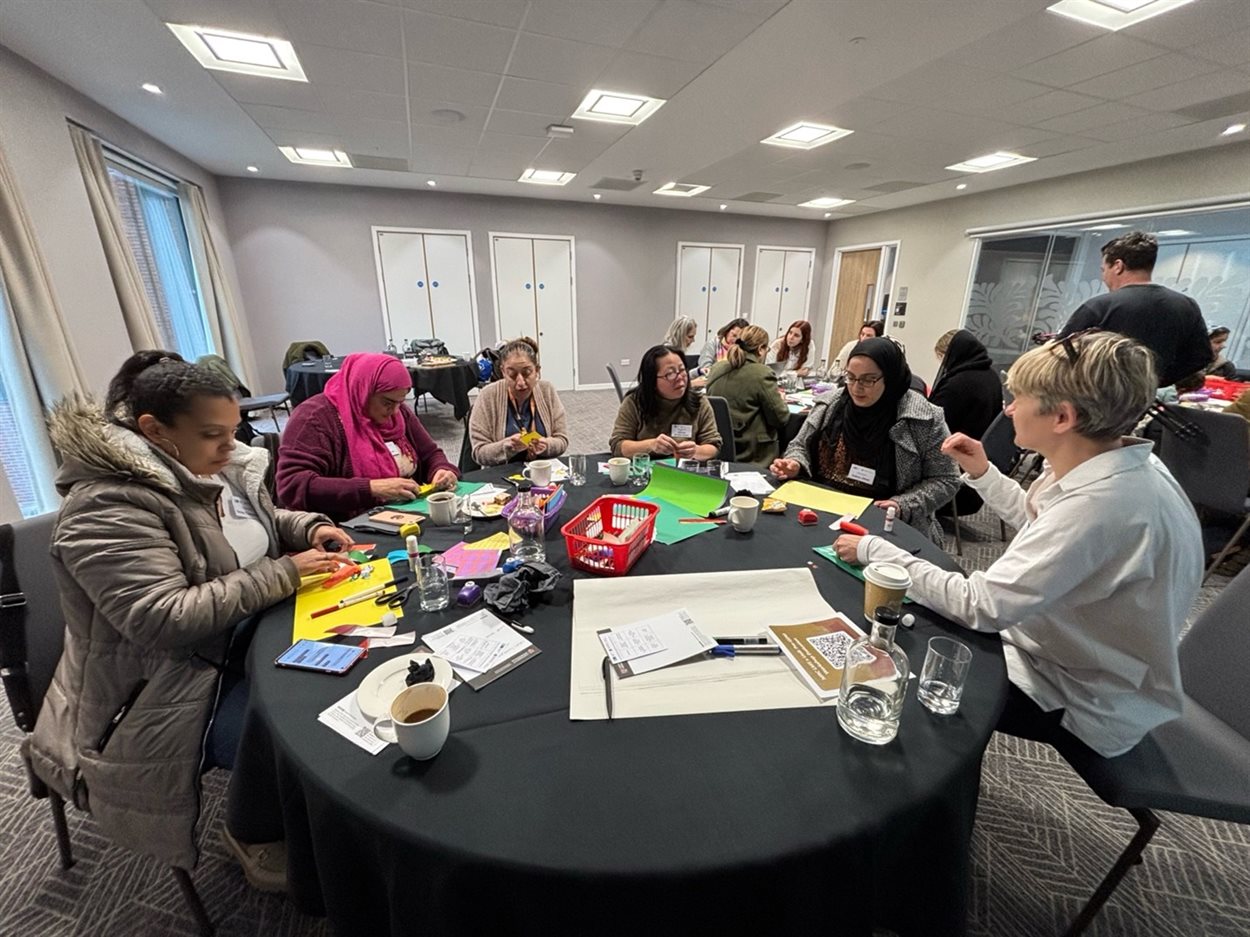
Workshops also sought to highlight and raise awareness of active research in PCOS and GDM. We therefore invited not only researchers from UoB and LMS, but also other colleagues undertaking important work in the space from across the UK. This provided an opportunity for scientists to demonstrate some of the breadth of work being done nationally, whilst also serving as a less formal route to meeting and engaging with each other. Similarly, those with lived experience also had the opportunity to encounter and make connections with others like them. To assess whether the events were successful in this aim, an evaluation of the workshops and public engagement showcase was carried out.
Both workshops successfully increased the interest in research for 75% of the public member respondents. Meanwhile, 92.9% and 70% of the PCOS and GDM workshop participants recorded an increased interest in the collaboration between art and science respectively. Some PCOS participants also expressed optimism upon realising that far more research is being done than they previously thought. Notably, a participant who had been trying to block out her traumatising GDM experience commented on how she felt herself making peace with her emotions and feeling she could finally move on and share her story with others, which had a powerful impact. A mother and daughter also shared how they had been able to speak more openly about GDM for the first time together.
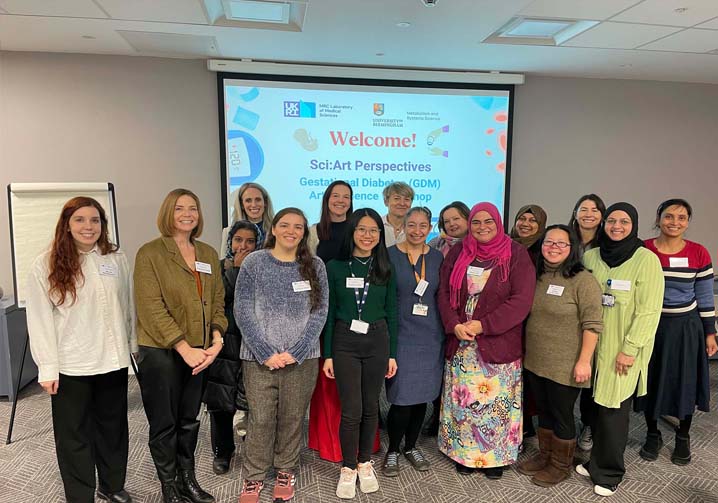
Sci:Art Perspectives: Gestational Diabetes Art & Science Workshop
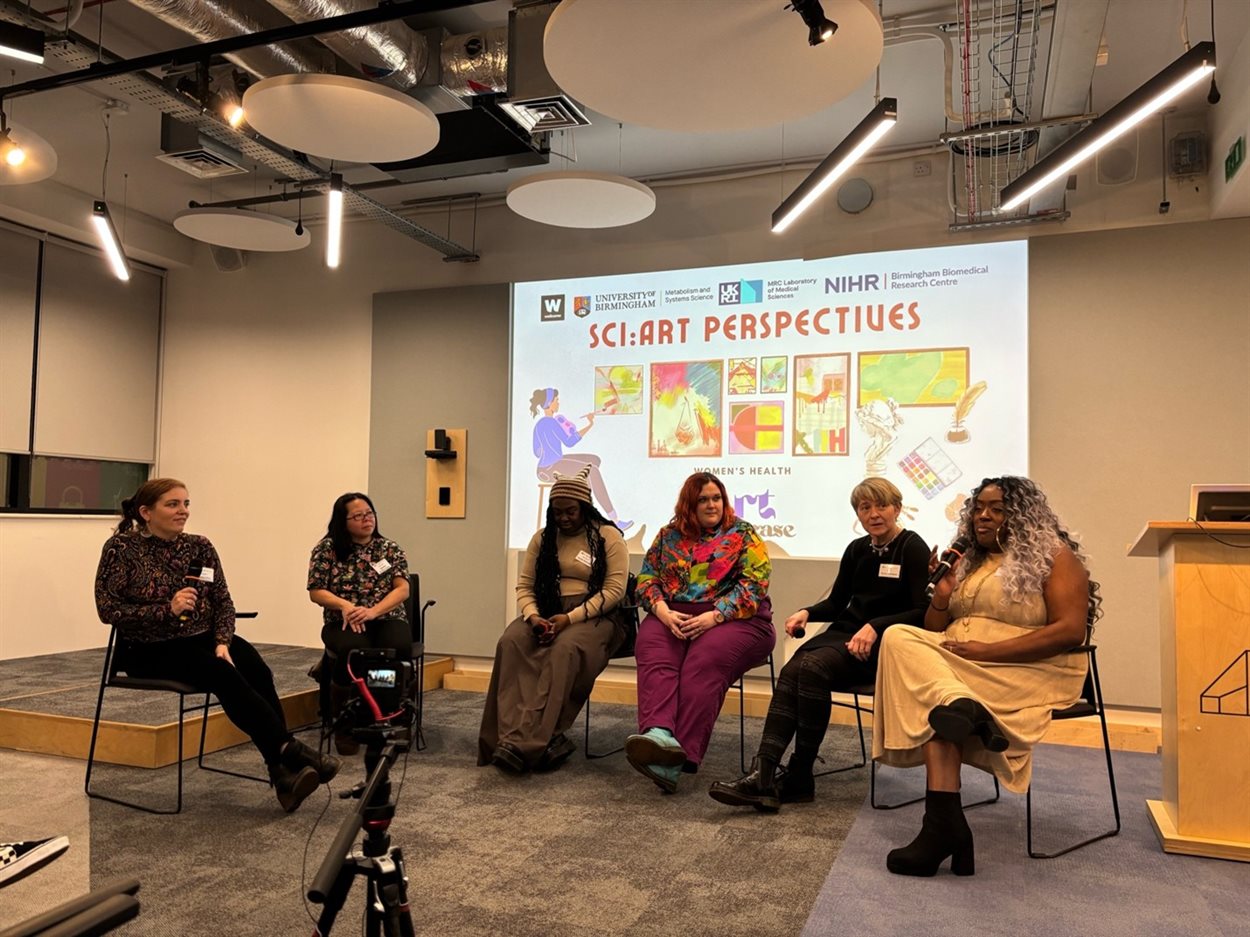
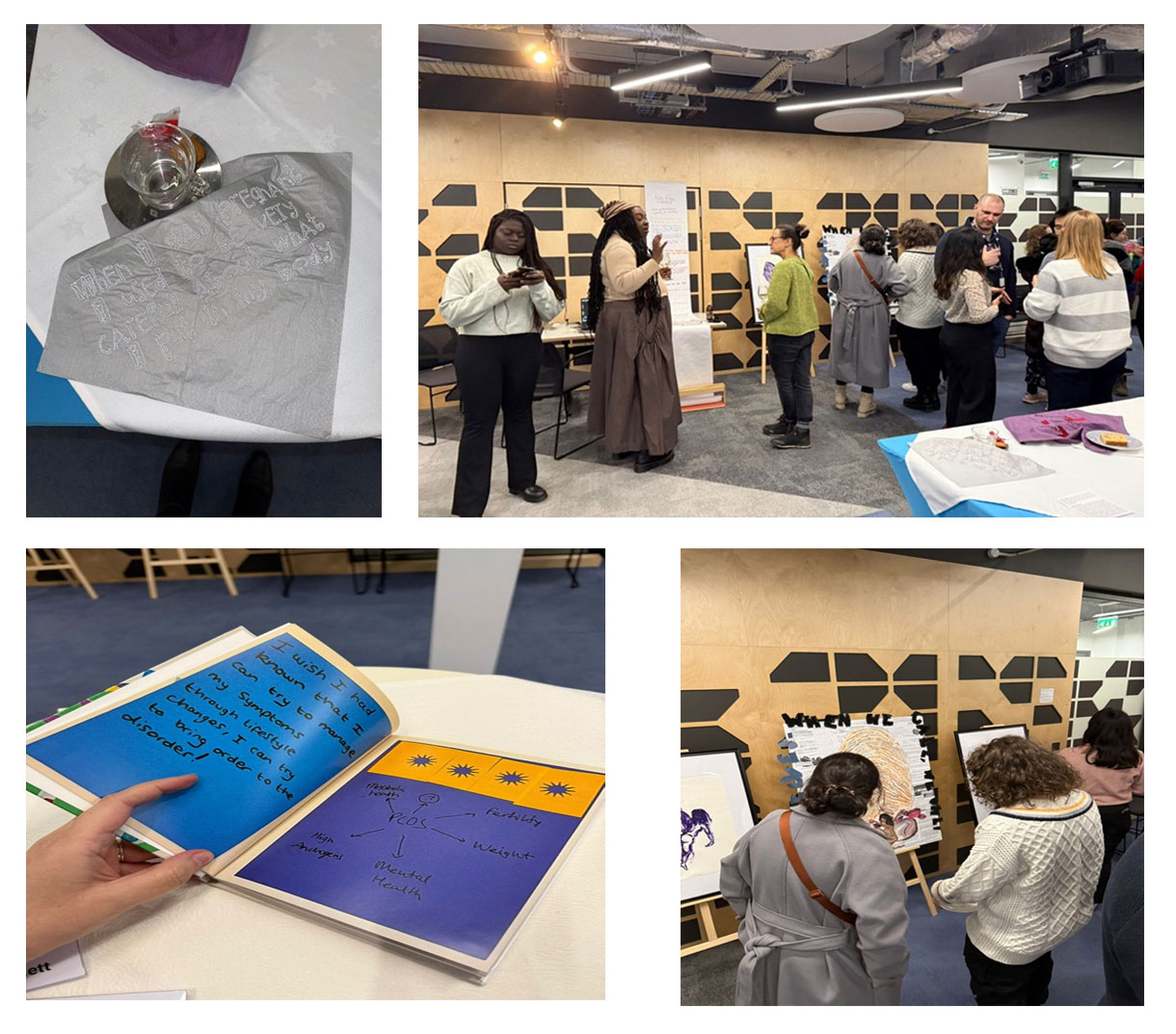
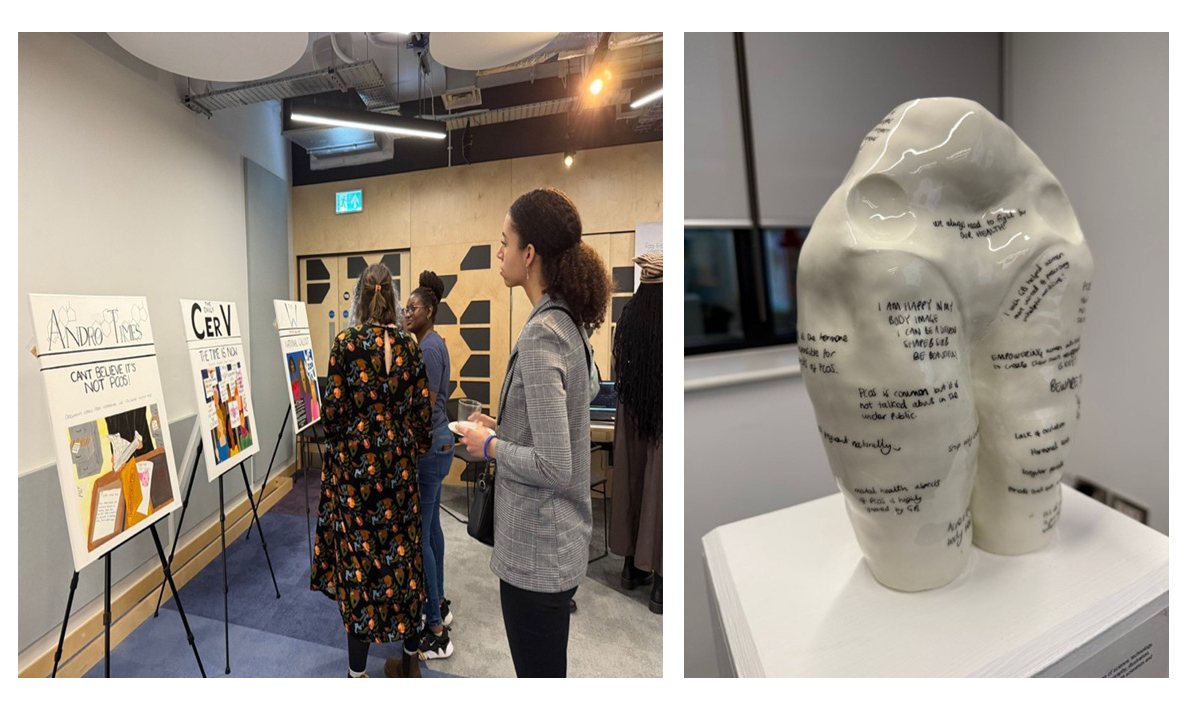
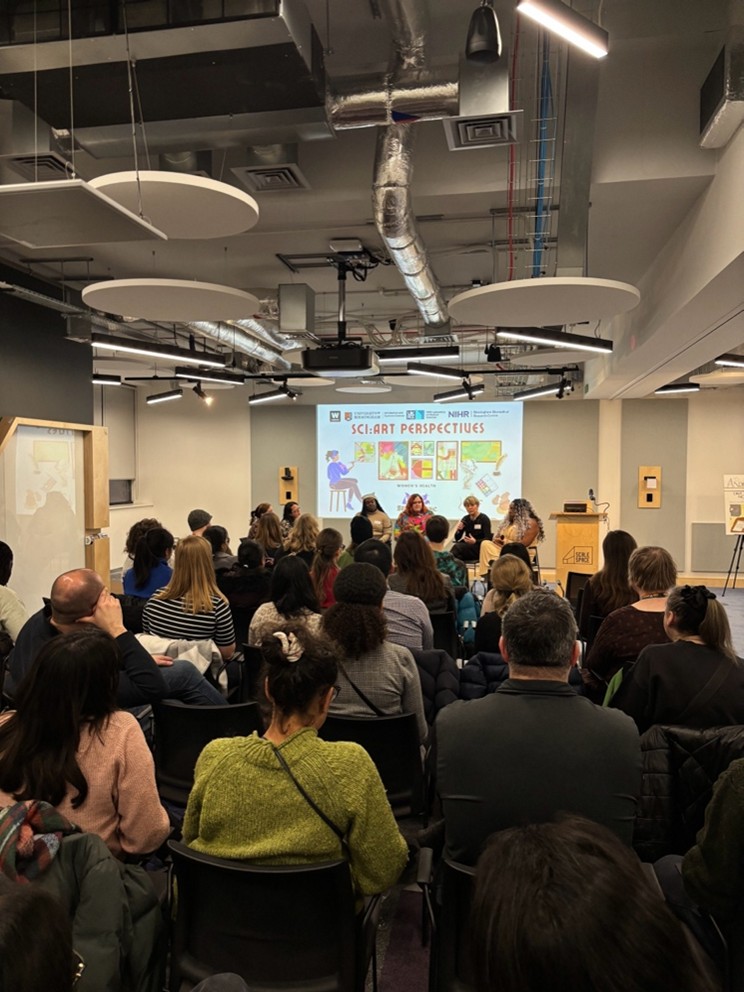
Following the workshops, the artists created a variety of artworks, including sculpture, embroidered textiles, paintings and participatory poetry, reflecting both the scientific and personal perspectives on PCOS and GDM. These were displayed at a public art showcase event that attracted many audience visitors and also featured a panel discussion. The panel included a GDM researcher with lived experience of GDM and the artists, some of whom have PCOS themselves, exploring the role of art in communicating science. The art provided a creative platform to learn about these conditions, engaging a wider community.
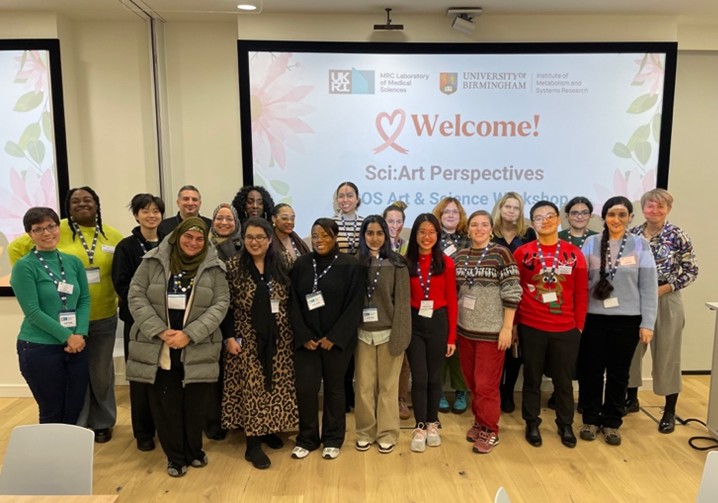
Sci:Art Perspectives: PCOS Art & Science Workshop
The event evaluation demonstrated that 100% of the respondents found it worthwhile bringing scientists, artists and patients together and all of them agreed that art should be used more often to engage people with science and research. One participant admitted that despite coming from a science background, they knew very little about PCOS or GDM before but gained a deeper understanding through the art showcase. Another mentioned that they were previously unsure how science and art could come together but after the art showcase, they realised there is something in common between the two fields. This art showcase successfully increased the interest in science and in art for 66.7% and 80% of the public respondents, respectively. Half of the respondents who study or work in science also reported a greater appreciation for art post-event. It is worth noting that several attendees came from either a science or an art background, hence, they came with a certain level of pre-existing interest in those fields. Nevertheless, this event successfully highlighted the importance of interdisciplinary collaboration between art and science, exploring a creative approach to disseminating research and engaging the public with science. The project team have since also been approached by new artists who were keen to collaborate on future projects.
Sci:Art Perspectives: Women's Health Art Showcase
In summary, Sci:Art Perspectives showed the impact of bringing art, science and lived experience together to collaborate and engage others with health topics. This ambition is a recurring theme within Dr Caroline Gillett’s practice and she was recently awarded the 2025 Light of Understanding Award for her work leading an artist in residence programme between 2020-2025. The project also showed how different research centres can collaborate together for a greater cause to champion each other’s work and to provide greater confidence to the public that research into their topics of interest is being done. Plans are already underway for the next project in this vein and further involvement and engagement opportunities are in the pipeline!
If you are interested in supporting women’s health research through patient and public involvement and engagement that utilises innovative and creative approaches, sign up to The Hildas membership for future opportunities.
We wish to thank everyone involved in the project directly as patient and public partners, researchers and artists well as members of the public and colleagues who attended our public engagement event.
Acknowledgement
This project is funded by Wellcome Trust awarded to Professor Wiebke Arlt and managed by Dr Caroline Gillett (University of Birmingham), Cadence Ong (Imperial College London & MRC LMS) and Dr Lindsay Keith (MRC LMS).
In addition to the artists (Karina Thompson, Yasmin Nicholas, Mellissa Monsoon, Danielle Louise Radway), we would like to acknowledge the contributions from our workshop participants (names listed alphabetically):
Researchers: Aisha Janjua (Birmingham Women's Hospital), Ali Abbara (Imperial College London), Eka Melson (MRC LMS), Francesca Crowe (University of Birmingham), Gabriela Da Silva Xavier (University of Birmingham), Ildem Akerman (University of Birmingham), Jadine Scragg (University of Oxford), Lida Abdi (MRC LMS), Moscho Michalopoulou (University of Oxford), Nerys Astbury (University of Oxford), Pushpa Singh (University Hospitals Birmingham NHS Foundation Trust), Rachel McNeill (University of Birmingham), Sara White (King’s College London), Stephen Franks (Imperial College London), Wiebke Arlt (MRC LMS), Wogud Ben Said (University of Birmingham)
Public members: Asiya Sultana, Bass Zaman, Destinee Cushnie-Mason, Elvia Carvalho Silva, Kaydine Biscette, Maham Amjad, Marya, Minna Ventsel, Ria Peart, Riham Lotfi, Sabina Jehan, Sammy Kong, Shameem Begum, Sonia Thompson, Sunila Siddiqui, Syrah Saeed.
And those who wished to be credited anonymously.