

Annual Network Meetings
BactiVac hosts Network Meetings for our members every year to connect and collaborate with internationally renowned experts in bacterial vaccinology.
Save the Date
BactiVac 7th Annual Network Meeting 2026
Rio Othon Palace Hotel, Rio de Janeiro, Brazil
10 – 12 November 2026

BactiVac are delighted to announce that our 7th Annual Network Meeting will be hosted in collaboration with Fiocruz at the Rio Othon Palace Hotel in Rio de Janeiro, Brazil from 10 – 12 November 2026. We are honoured to be working with Fiocruz, which is one of the worlds main public health research institutions, focussing on research and development in biological sciences.
Delegates will have opportunities to hear from globally acclaimed speakers and broaden connections within our membership. The three-day programme will be an excellent forum for exchanging ideas and furthering research possibilities.
Please note this event will be in-person only and attendance will be open to members only. You can apply for free membership here.
Full details of the meeting will be sent through to Network Members and made available here as soon as possible.
In the meantime, please do ‘Save the Date: 10 – 12 November 2026’.
Contact for further enquiries
For all queries, please contact the BactiVac Administration Team via e-mail.
Previous Annual Meetings
6th Annual Network Meeting 2025
6th Annual Network Meeting 2025
5 - 6 November 2025
Edgbaston Park Hotel & Conference Centre, Birmingham, UK
BactiVac was delighted to host its 6th Annual Network Meeting in Birmingham, UK, at the Edgbaston Park Hotel and Conference Centre.
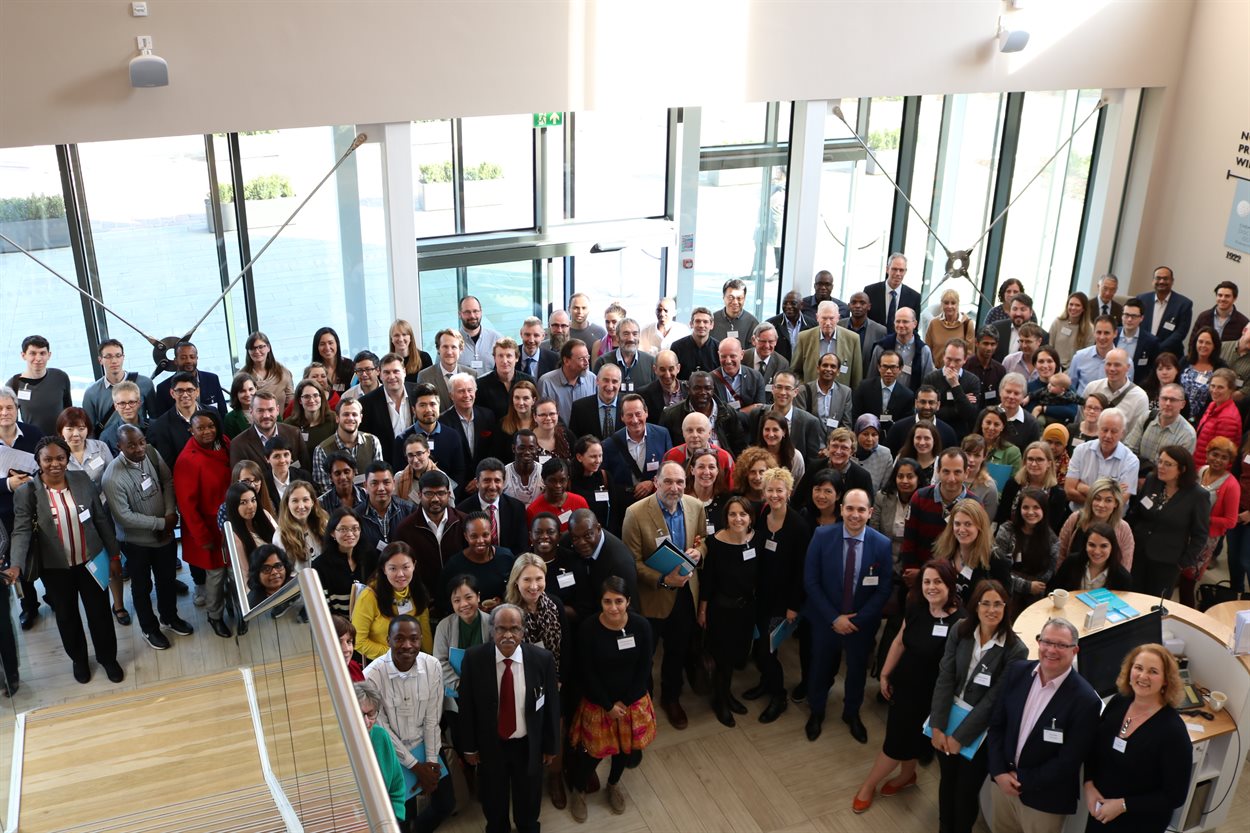
BactiVac welcomed 175 Network Members from 30 different countries to Birmingham to this year’s Network Meeting, and via a competitive process awarded travel bursaries to support attendance from LMICs and early-career researchers. This nurtured a rich diversity of perspectives and experiences which is an essential part of our mission to drive progress in bacterial vaccine development.
Our latest photo shows a special moment from the meeting where all of our delegates came together for our annual group photo:

Attendees engaged with an impressive line-up of speakers from research, industry, and manufacturing who delivered thought-provoking talks that sparked lively discussions during the Q&A sessions. True to its mission, BactiVac continues to unite voices from across the globe to collaborate toward our shared goal.
The Annual Network Meeting offered a welcoming and collaborative setting, beginning with a Grant Writing Workshop (LINK to GWW page) on 04 November, led by Dr Chris Pull from Scriptoria. Tailored for early-career researchers, the Workshop delivered practical strategies for crafting proposals which equipped participants with the skills and confidence to secure future funding opportunities.
Day one of the Network Meeting began with a series of insightful talks on the ‘Evolving use of Bacterial Vaccines’, followed by oral presentations from selected abstracts. Later in the afternoon, our popular speed networking session brought attendees together to spark new connections and share ideas—an energy that continued into the poster viewing session.
This fantastic networking opportunity was followed with more impactful talks on day two on the topics of ‘Vaccine Development and Implementation’, and ‘Vaccine Economics’. Next in line was a Regulatory Workshop led by Dr Carmen Coxon, Principal Scientist at Medicines and Healthcare Products Regulatory Agency, UK (MHRA). The Workshop explored key regulatory perspectives relevant to product development and the registration process, using comparative examples from the UK, Malaysia, and countries across the African continent, with a particular focus on Uganda.
The 2025 Annual Network Meeting marked a significant milestone, reflecting the continued growth and impact of our Network which now comprises nearly 2,400 members across 92 countries. We are excited to build on this momentum in the year ahead and look forward to welcoming you to our 7th Annual Network Meeting, details of which we hope to share in early 2026.
5th Annual Network Meeting 2024
5th Annual Network Meeting 2024
Ho Chi Minh City, Vietnam
04 – 07 November 2024
BactiVac was proud to host its 5th Annual Network Meeting in Ho Chi Minh City, Vietnam, in collaboration with The Oxford University Clinical Research Unit (OUCRU) at the Sheraton Saigon Hotel & Towers.
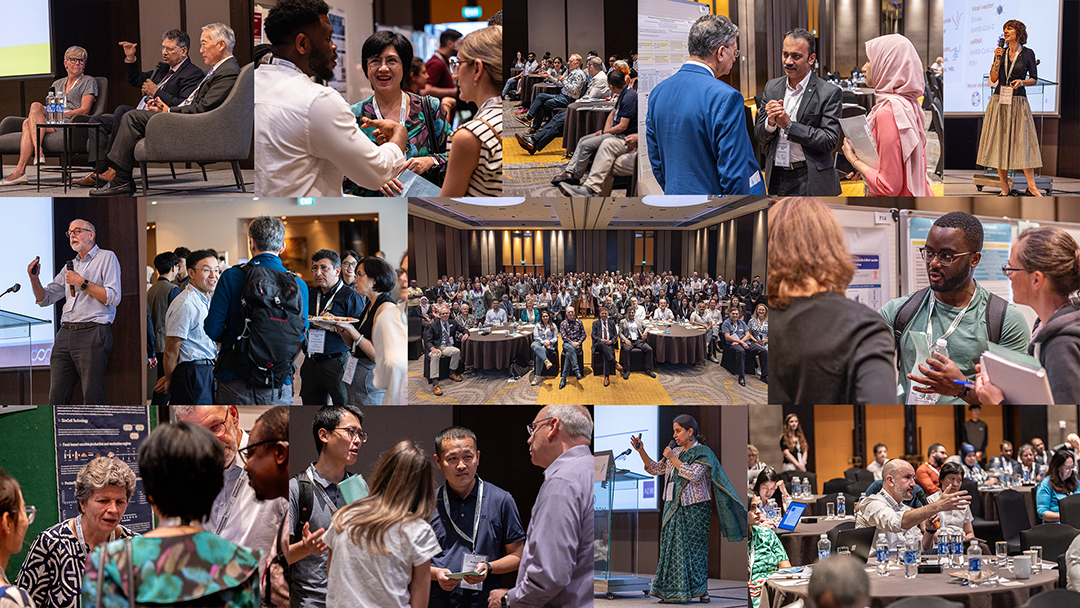
We welcomed an attendance of 176 Network members from 32 different countries. BactiVac provided travel bursaries to enable early career researchers to attend, ensuring diversity of experience and perspective, which is central to our mission to accelerate the development of bacterial vaccines.
See the meeting highlights video:
Attendees heard from a variety of speakers within research, industry and manufacturing, and a number of delegates were also able to visit and tour OUCRU’s impressive laboratory facilities. BactiVac continues to uphold its promise to bring together voices internationally, including those within agriculture, sociology, manufacturing, policy, and more, to work most effectively towards our shared goal.
The Annual Network Meeting provided a supportive environment for collaboration, starting with a speed-networking event on the first day of the conference. Connections were formed and fostered over the coming days, with another opportunity for shared practice in our poster session, which saw over 35 presenters sharing their research activities.
To close the programme, BactiVac invited Hilleman Laboratories to deliver a half-day workshop on ‘‘What Does it Take to Move a Vaccine Through the First ‘Valley of Death?’. The workshop provided valuable insight into vaccine development and building a business case. The workshop ended with an interactive Q&A session featuring a panel of Dr Jerome Kim, Mr Rajinder Kumar Suri, and Ms Kay Hunsberger, where members were given exclusive access to leaders within industry, in line with BactiVac’s mission to unite different voices within bacterial vaccinology.
2024 was BactiVac’s largest Annual Network Meeting to date – a reflection of the continued growth and success of the Network, which now stands at over 2,000 members from 90 different countries. We look forward to furthering our reach over the next year and hope to see you at 2025’s event in Birmingham, UK.
4th Annual Network Meeting 2023
4th Annual Network Meeting 2023
Edgbaston Park Hotel & Conference Centre, Birmingham, UK
18 – 19 October 2023
BactiVac was honoured to welcome 158 of our members to its 4th Annual Network Meeting in Birmingham, UK, with representation from 28 countries.
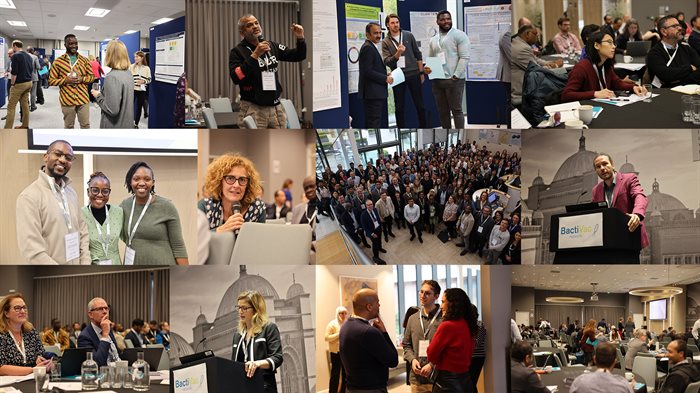
The Annual Network Meeting reminds us all that we are in this together across the globe. The meeting offered a unique, focussed opportunity to hear from experts in academia, industry, policy and funding bodies to highlight the tremendous work being undertaken and remind us to not only focus on new vaccines but also address what is happening with existing vaccines with breakthrough strains and disease re-emergence.
See the meeting highlights video:
Opportunities for networking are not only built into the programme through our speed-networking session, but we also saw the vibrant engagement of all attending within the poster session, highlighting the exciting work being undertaken internationally.
As a Network we are stronger as a network of networks, and this was encapsulated by the talks given during the event to remind everyone that working together to bridge the gaps is so important.
The Network was pleased to see the recipients of our travel bursary awards having the opportunity to take part in the meeting and add the LMIC perspective which is invaluable to us all when working in partnership to address the global challenges in bacterial vaccinology.
Ahead of our 4th Annual Network Meeting, we hosted Grant Writing Workshop for early career researchers on Tuesday 17 October 2023. The Workshop was delivered by Dr Laura Knogler from Scriptoria. Attendees representing eight different countries had the benefit of taking part in this Workshop, where the programme focused on developing scientific writing skills to produce high quality grant proposals. All participants received a comprehensive set of course notes in addition to tools and software tips. The workshop was interactive, with participants being encouraged to ask the questions they may have always wanted to ask.
For all queries, please contact the BactiVac Administration Team: bactivac@contacts.bham.ac.uk
3rd Annual Network Meeting 2022
3rd Annual Network Meeting 2022
2022 Annual Network Meeting
08-10 November 2022
Kilifi, Kenya
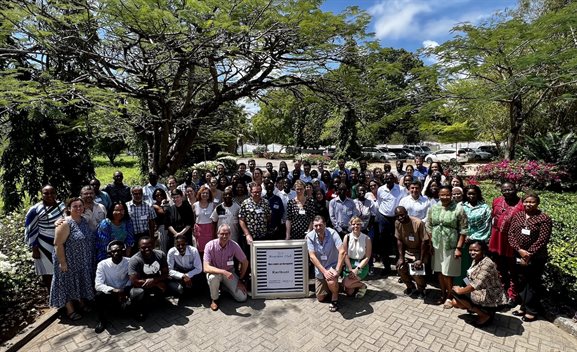
After having to postpone our 2020 meeting due to the impact of COVID-19, we were thrilled to have finally been able to host this meeting 8-10 November 2022 in collaboration with The KEMRI Wellcome Trust Research Programme (KWTRP) in Kilifi, Kenya.
We were delighted to welcome 94 attendees with representation from 23 countries - thus ensuring it was truly a global affair. The three-day meeting brought together scientists, academics, industry partners, funders, and policymakers from around the world, all with the shared vision to develop and implement bacterial vaccines to address global challenges. The programme offered talks from internationally renowned speakers, covering a breadth of topics.
The importance of holding a Network Meeting in such a setting really demonstrated its value, with attendees being able to gain an insight to the tremendous work undertaken at the KEMRI site, with inspirational talks enlightening the audience about the challenges faced in achieving research aims and goals within an LMIC setting.
Throughout the event attendees were able to meet many new potential collaborators as well as existing colleagues. Opportunities were offered throughout the meeting to ensure that attendees felt able to interact at all levels, which is something of great importance to BactiVac.
BactiVac was able to support attendance by some our members through its Travel Bursary Programme and you can read comments from travel bursary recipients on our website (in due course).
We would like to thank The Bill & Melinda Gates Foundation, the Institute for Global Innovation and our core funder, the Medical Research Council, for their generous financial support to deliver this meeting.
We look forward to welcoming our members to forthcoming events throughout 2023, including the BactiVac Network and Microbiology Society Focused Meeting 'Vaccines As Tools To Combat Antimicrobial Resistance' which will take place on 27–28 February 2023 in Birmingham, UK. The Network is also working on plans for our next Annual Network Meeting in the Autumn of 2023.
We are very much hoping to see many of you at events we are holding throughout 2023!
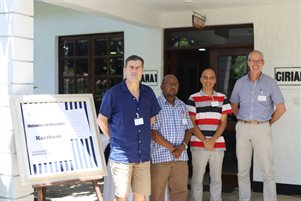
From right to left: Professor Cal MacLennan – Director, BactiVac Network, UK; Professor Philip Bejon – Executive Director, KEMRI Wellcome Research Programme, Kenya; Dr Joseph Mwangangi, Deputy Director, KEMRI Center for Geographic Medicine Research, Kenya; Professor Adam Cunningham, Co-Director, BactiVac Network, UK.
BactiVac Online: Virtual Network Conference 2021
BactiVac Online: Virtual Network Conference 2021
More than 200 scientists, industry figures and policy-makers from 30 countries around the world gathered online to share expertise at the BactiVac Virtual Network Conference 2021, hosted this year from the Senate Chamber at the University of Birmingham in the United Kingdom.
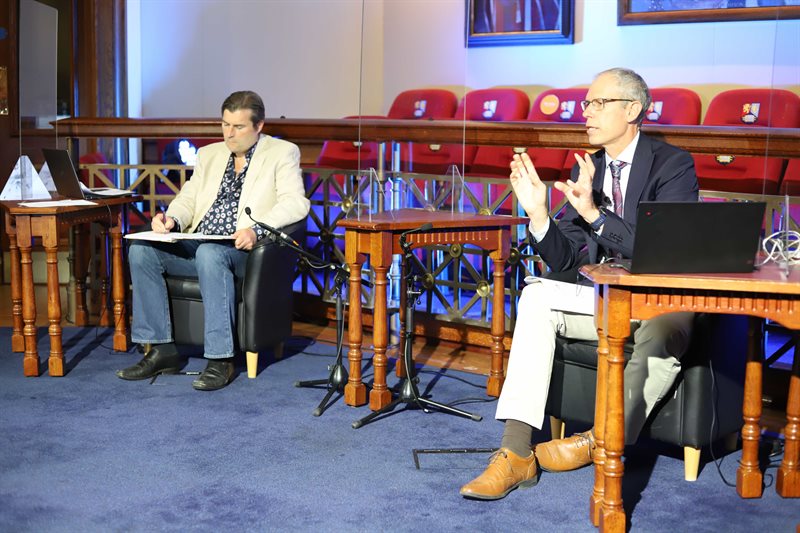
High-profile contributors at the online event included Professor Dame Sally Davies, the UK Special Envoy on Anti-Microbial Resistance, as well as Emeritus Professor of Pediatrics Dr Stanley A. Plotkin, who pioneered the Rubella vaccine and joined the event live from the University of Pennsylvania in the United States of America. Other contributors joined in a series of live and pre-recorded sessions from a variety of locations around the world including India, Bangladesh, China, Africa, Ireland, the United States of America and the United Kingdom.
Held on the 27 and 28 April 2021, there were talks on a wide range of topics, from up-to-date insights on tackling anti-microbial resistance in low and middle-income countries (LMICs) to the role of veterinary vaccines and a “One Health” perspective on bacterial vaccinology, the latest news on global vaccine development, engagement with industry and the role of regulators.
BactiVac Director Professor Cal MacLennan said: “We have had two days of fantastic talks, delivering the latest advances in key areas including anti-microbial resistance, the production of vaccines in Europe, India and China, the crucial role of regulators, maternal vaccination in LMICs, the vital role of industry and the nexus between human and veterinary medicine.”
“As someone who has worked in industry as well as academia, I particularly appreciated the industry element of the meeting, with three talks from industry and manufacturers, Dr V Krishna Mohan from Bharat Biotech in India, Dr Xin Tong from Walvax in China and Dr Jan Poolman from Janssen vaccines in the Netherlands. This industry engagement is vital for us as a network that sees vaccines move all the way along the vaccine pipeline. We have to be engaged with manufacturers and that was a real highlight for me.”
“The One Health aspect is of key importance and is very much part of our network. Professor Dame Sally Davies referred to this on the first day in relation to anti-microbial resistance. If we can control bacterial disease in the veterinary world then we reap economic benefits in addition to reducing disease transfer to humans.”
BactiVac Co-Director Adam Cunningham, Professor of Functional Immunity at the University of Birmingham, said: “BactiVac is important because it helps bring people together from all disciplines to share their expertise. We saw this probably most clearly in the talk from Dr Kathleen M Neuzil from the University of Maryland in the United States of America on the first day, showing how a single dose of one vaccine against typhoid reduced cases by 80%. This is the combination of decades of work from multiple people, from basic scientists to chemists, to epidemiologists and policymakers all the way along the vaccine pipeline.”
“The two days have been a journey on how to take an idea or a product and turn it into something real and that is absolutely essential. One of the elements I really liked was understanding the role of the regulatory bodies and how they contribute. The talk from Dr Mair Powell, from the Health Products Regulatory Authority in Ireland, gave us fascinating insights into the thought processes required for that. I also really liked the veterinary aspect. I now have more appreciation for elements that I had not quite taken on board before and particularly the harshness of the economic reality of vaccines for veterinary purposes. Overall, each of the two days had a different emphasis and all of it is about pushing vaccines down the pipeline.”
For all queries, please contact the BactiVac Administration Team: bactivac@contacts.bham.ac.uk
2nd Annual Network Meeting 2019
2nd Annual Network Meeting 2019
Building on the success of last year’s Inaugural Meeting, the 2nd Annual Network Meeting was held on 20 & 21 March 2019 and not only gave those attending opportunities to broaden connections within our membership, but also provided an excellent forum for exchanging ideas and furthering research possibilities.
Ahead of our 2nd Annual Network Meeting, we hosted our first Grant Writing Workshop for early career researchers on Tuesday 19 March 2019. The Workshop was delivered by experienced and enthusiastic facilitators from Scriptoria. Attendees representing 12 different countries had the benefit of taking part in this Workshop, all of whom can’t now wait to start putting their new skills into practice. The programme focused on developing scientific writing skills to produce high quality grant proposals. Attendees were thoroughly engaged throughout this interactive Workshop and the feedback provided clearly demonstrates that the day was enriched with the practical exercises and study materials, all of which left participants well prepared to apply the tools learnt during the workshop.
We were delighted to welcome 158 of our members to the BactiVac 2nd Annual Network Meeting in Birmingham, UK, with representation from 25 countries - thus ensuring it was certainly a global affair. The two-day meeting brought together scientists, academics, industrial partners and policymakers from around the world, all with the shared vision to develop and implement bacterial vaccines to tackle global challenges. The programme offered talks from internationally renowned speakers, covering issues such as the problem of chronic underfunding of global health bacterial vaccine research & development and how traditional expensive vaccine development can be overcome with a highlight on the value of vaccines and impact on human life expectancy and how new technologies are enabling us to overcome challenges. Attendees were treated to an eye-opening presentation on the challenges that face SMEs in vaccine development.
The Network was pleased to see the recipients of our travel bursary awards having the opportunity to take part in the meeting and add the LMIC perspective which is invaluable to us all when working in partnership to address the global challenges in bacterial vaccinology.
Over the two days, members were able to network and meet many new potential collaborators and friends. The opportunities offered throughout the meeting to ensure that attendees felt able to interact at all levels, which is something of great importance to BactiVac, with the proverb “If you want to go quickly travel alone, if you want to go far go together” being uppermost in all our minds.
For all queries, please contact the BactiVac Administration Team: bactivac@contacts.bham.ac.uk
Inaugural Annual Network Meeting 2018
Inaugural Annual Network Meeting 2018
We were delighted to welcome 108 of our members to the Inaugural Meeting of our Network on 26 and 27 February 2018 at the University of Birmingham, UK. The frosty weather did not affect the warmth of greeting within the meeting with attendees having travelled from far and wide (with representation from 14 different countries).
The primary aim of the BactiVac Network is to bring our members together in order to facilitate collaborative working to accelerate the development of bacterial vaccines. We saw this in action at our Inaugural Meeting, where members were busy networking with new colleagues, discussing new possibilities and brainstorming problems often faced in the vaccine development pathway.
The programme delivered a host of talks from internationally renowned speakers on the bacterial vaccine development pipeline. The talks ranged from the basic science underpinning vaccine development to their commercial production and delivery. We heard about the success stories as well as the challenges and also lessons learned that should help us to expedite the development of future vaccines.
It was good to see the recipients of our travel bursary awards having the opportunity to take part in the meeting and add the LMIC perspective which is invaluable to us all when working in partnership to address the global challenges in bacterial vaccinology.
The meeting was the platform for launching our first catalyst funding call for proposals to promote new collaborations and partnerships. BactiVac will be providing awards for pump-priming projects (up to £50-100k for 6-12 month durations) and training awards (up to £6k) to support our members to explore new approaches and strategies to advance vaccine development and to address key skills gaps.
Previous Collaborative Events
BactiVac at IVIS 2025
BactiVac at IVIS 2025
BactiVac at IVIS 2025 -
Challenges in Developing Bacterial Vaccines for Veterinary Infections Workshop
The BactiVac Network & 14th International Veterinary Immunology Symposium (IVIS)
Vienna, Austria
11 August 2025
On 11 August 2025, BactiVac partnered with IVIS to deliver a pre-symposium workshop on “Challenges in Developing Bacterial Vaccines for Veterinary Infections.” The session was opened by BactiVac Director Adam Cunningham, with chairs and speakers including Co-Director Constantino López-Macías, board members Peter Borriello, Mark Stevens, and Jeremy Salt, and invited guests Francesca Martelli, Tom McNally, and Elise Schieck, who brought their expertise to the discussions. With over 120 delegates attending the workshop and more than 300 participants at main IVIS conference in person, the event was an important opportunity to exchange ideas, build collaborations, and address barriers to developing effective veterinary vaccines.
See the meeting highlights video here:
The BactiVac workshop built on a previous session led by Gary Entrican and Jayne Hope at IVIS 2023, which examined the opportunities and challenges of adopting novel platform technologies for veterinary bacterial vaccines. At IVIS 2025, the workshop aimed to explore why progress in bacterial vaccine development is so difficult, despite the urgent need for new tools to protect animal health. Bacterial zoonoses exert significant societal and economic costs, including foodborne illness and direct contact of humans with infected animals. Animal hosts of zoonotic pathogens can suffer the same diseases observed in humans, providing further motivation to control infections as well as tractable models to understand the basis of pathogenesis and protection. While detailed knowledge exists on pathogen genomes and virulence factors, practical and financial barriers, such as the high cost of research, lack of reliable correlates of vaccine success, and limited incentives for deployment, continue to slow down vaccine development.
To discuss these challenges, Salmonella was presented as a cross-cutting example, relevant to both animals and humans, and provided a basis for discussion on pathogenesis, antigen identification, and vaccine strategies. E. coli O157 was highlighted as a pathogen of limited veterinary relevance but one of major concern for human health. The programme concluded with Mycoplasma infections, which are directly relevant to animal health and remain a significant challenge for livestock production.
The workshop underlined the vital role of immunologists in overcoming scientific and practical hurdles and in driving innovation in veterinary vaccine development. By bringing together experts across diverse disciplines, the session helped strengthen collaborations and set the stage for progress in tackling bacterial infections that threaten both animal and human health.
BactiVac would like to thank the IVIS organising committee for the opportunity to host this workshop as part of the symposium. We are also grateful to our board members and invited speakers for sharing their expertise, and to all participants whose engagement and contributions made the discussions so valuable. The success of this session reflects the strength of the bacterial vaccine community and our shared commitment to advancing veterinary vaccine research.
BactiVac has captured the insights, discussions, and perspectives shared during the workshop in a report titled “Considerations for Developing Bacterial Vaccines for Veterinary Infections.” This report makes the rich workshop discussions accessible to a wider audience and supports ongoing efforts to address the challenges and bottlenecks in developing vaccines for veterinary infections.
The report can be accessed here, we strongly encourage readers to share it with networks and organisations they feel may benefit from these insights. At the end of the report, a QR code links to a survey, and your feedback would be greatly appreciated.
For all queries, please contact the BactiVac Administration Team: bactivac@contacts.bham.ac.uk
Vaccines and Antimicrobial Resistance - from Science to Policy 2024
Vaccines and Antimicrobial Resistance - from Science to Policy 2024
The BactiVac Network & Royal Society Science+ Meeting
The Royal Society, London, UK
29 - 30 April 2024
We were delighted to see many BactiVac members in London at the end of April. BactiVac provided travel bursaries for a number of our overseas members to attend, many of whom gave excellent poster presentations. The key objective of the meeting was to take a One Health approach to the role of vaccines in reducing antimicrobial resistance (AMR) and to evidence translation into policy from a global context with specific emphasis on low- and middle-income countries (LMICs).
See the meeting highlights video:
The meeting assembled global experts from academia and industry, economists, regulators, policy makers and funders from high-income countries and LMICs working in the fields of human and veterinary vaccines against bacterial pathogens of global AMR concern. Day 1 addressed the scientific evidence of how vaccines are a key tool against AMR, acting both directly, by reducing antibiotic-sensitive and AMR infections, and indirectly, by reducing antibiotic use. Day 2 focused on how this evidence can be used to drive policy, culminating in a discussion on recommendations for the United Nations High-Level Meeting on AMR to be held in New York in September 2024.
As well as hearing a set of excellent talks, it was fantastic to have great engagement, discussion and questions, as well as networking, throughout the two-day meeting from all present. We are very grateful to the Royal Society for hosting the meeting and to Dame Sally Davies, UK Special Envoy on AMR, for kindly agreeing to co-chair with Professor Cal MacLennan, BactiVac Network Director. The key outcomes and recommendations from the meeting are shown below, and we look forward to future engagement in the advocacy space for the importance of bacterial vaccines in the fight against AMR.
Key outcomes:
- AMR is a One Health problem with devastating health & economic consequences, particularly in LMICs
- The importance of vaccines in addressing AMR is under-appreciated
- Vaccines are an effective tool against AMR, both in humans and animals, but more evidence is needed
- Limited vaccines are available against the bacterial pathogens which are responsible for 1.27 million AMR deaths/year
- There is limited funding to develop new vaccines, despite an estimated economic cost of US$3-7 trillion/year by 2050 from AMR
- The vaccine community must effectively communicate the role that vaccines play in reducing AMR
Recommendations:
- There is a critical need for a coordinated, multi-disciplinary One Health global approach to addressing the AMR crisis
- Human and veterinary vaccine fields have a pivotal role to play and must work together in order to achieve this
- The evidence that vaccines reduce AMR needs to be continually strengthened by scientific studies
- Advocacy is required for funding to drive vaccine development and implementation, particularly in LMICs
- Clear messaging is essential to articulate the importance of vaccines in AMR to stakeholders and policymakers globally
For all queries, please contact the BactiVac Administration Team: bactivac@contacts.bham.ac.uk
Vaccines as Tools to Combat Antimicrobial Resistance 2023
Vaccines as Tools to Combat Antimicrobial Resistance 2023
The BactiVac Network & Microbiology Society Focused Meeting
27–28 February 2023, Edgbaston Park Hotel and Conference Centre
Birmingham, UK
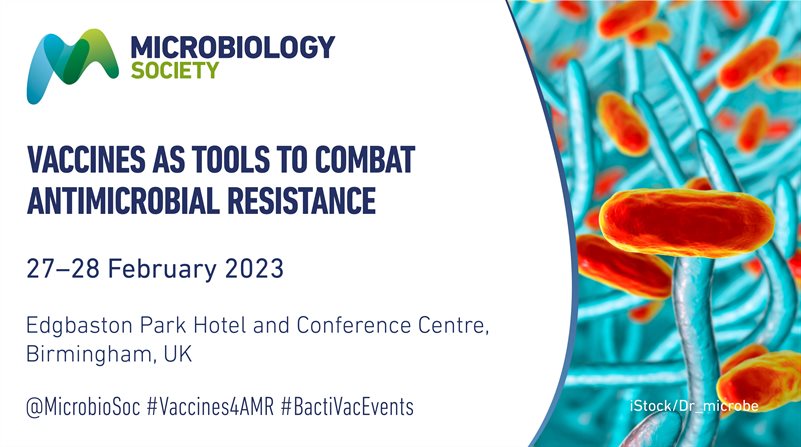
Vaccines As Tools to Combat Antimicrobial Resistance, an in-person Focused Meeting co-organised by the BactiVac Network and the Microbiology Society, took place on 27–28 February 2023 at the Edgbaston Park Hotel and Conference Centre in Birmingham, UK.
See the meeting highlights video:
Co-hosting the meeting with the Microbiology Society enabled the involvement of a diverse scientific community and a rich networking space for the delegates.
The programme boasted scientific talks by world-renowned speakers in the field of AMR, including topics on:
- AMR – the problem in the context of human and veterinary health
- The strengths and gaps in using vaccination to limit AMR
- Host responses to different bacterial antigens and vaccines – key lessons learned
- Enhancing the use of existing and novel platforms, technologies and adjuvants
- The targeting of bacterial pathogens to reduce AMR – addressing unmet needs
Poster presentations showcased diverse research topics in the field, allowing delegates to share their ideas and foster new collaborations going forward.
Networking is an essential aspect of all BactiVac events. This was encouraged through plenty of opportunities to socialise and a dedicated Speed Networking session that allowed attendees from diverse backgrounds to get to know each other and form connections in person.
BactiVac were delighted to welcome the recipients of 34 travel bursaries awarded by the Network to financially support attendance, in line with our ethos of enabling equity of access for members based in low and middle income countries.
You can find highlights of the event on Twitter from the @BactiVac team, the @MicrobioSoc team and the attendees of the meeting by searching for hashtags #Vaccines4AMR and #BactiVacEvents.
Thank you to all the organisers, speakers, poster presenters and delegates who joined us at the Focused Meeting and helped make it a success! We look forward to welcoming you to future events.
If you are not yet a BactiVac member, we encourage you to find out more about the Network and join the BactiVac community via our website: www.birmingham.ac.uk/bactivac
For all queries, please contact the BactiVac Administration Team: bactivac@contacts.bham.ac.uk
For the latest event updates in the build up to our meetings, follow us on our social media channels, including X (Twitter) @BactiVac, using #BactiVacEvents, and on LinkedIn.