

Staff in the Centre for Childhood Cancer Survivor Studies
Meet the senior staff working with the Centre based at the University of Birmingham.
Our team
Professor Mike Hawkins

Chair in Epidemiology
Director of Centre
Department of Applied Health Sciences
Mike Hawkins is Professor of Epidemiology and Director of the Centre for Childhood Cancer Survivors Studies.
He has published over 150 papers in peer-reviewed scientific and clinical journals mostly relating to the long-term health and social consequences of being treated for cancer. Mike has received programme grant funding from Cancer Research UK, the Kay Kendall Leukaemia Fund and the European Commission (EC).
Mr David Winter
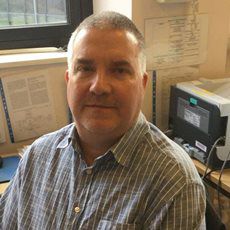
I.T. Manager
Department of Applied Health Sciences
David is the I.T. Manager for the Centre for Childhood Cancer Survivor Studies (CCCSS). He started his career in Oxford in 1982 and moved to the University of Birmingham in 1998. He has been an author on over 20 peer-reviewed publications in the field of childhood cancer epidemiology.
Dr Raoul Reulen
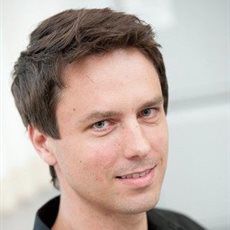
Senior Lecturer
Department of Applied Health Sciences
Raoul Reulen is a Senior Lecturer & NIHR Fellow at the Centre for Childhood Cancer Survivor Studies. Raoul’s primary research interest is cancer survivorship, particularly long-term survival after childhood cancer. Raoul has co-authored over 25 publications. He has taught undergraduate and post-graduate courses in Epidemiology, cancer and medical statistics since 2005.
Dr Clare Frobisher
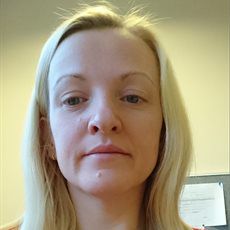
Honorary Research Fellow
Department of Applied Health Sciences
Clare Frobisher is an Honorary Research Fellow on the British Childhood Cancer Survivor Study (BCCSS).
Clare has published over 20 research papers in scientific journals and presented her work at several International and European conferences on the late effects of childhood cancer.
Her work from the BCCSS has explored the following areas of research in relation to 5-year survivors of childhood cancer diagnosed between 1940 and 1991 in Britain: risk of any subsequent neoplasm after childhood cancer and in particular the risk of a subsequent bladder tumour; alcohol consumption and smoking behaviours; marriage and divorce rates.