

Be active
Physical activity is good for both physical and mental wellbeing. Exercise releases chemicals into your brain that make you feel happier. It’s never too late to start living an active lifestyle and gain health benefits.
There are many benefits of regular exercise:
- Reduce stroke risk
- Boost your mood and reduce anxiety
- Increase energy levels
- Improve sleep
- Enhance brain functioning
Check with your GP if you are unsure what exercise is safe for you.
Initially I worried I would not be able to exercise in the same way. I was so happy when I returned to the gym and started exercising again.

How can I start being active or stay active?
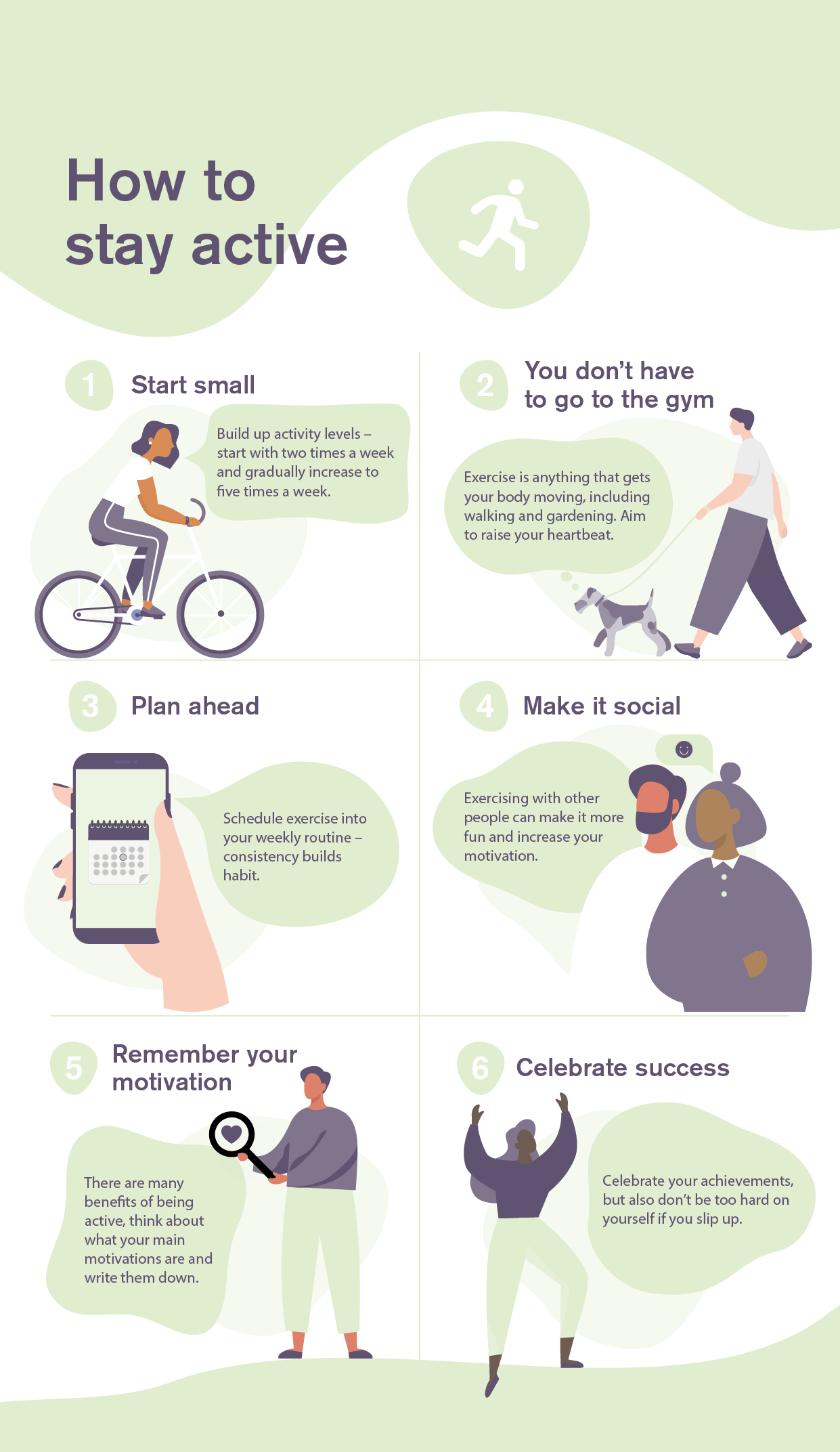
1. Start small
1. Start small
- Be realistic with what you can achieve.
- Slowly build up activity levels: start with 2 times a week and gradually increase to 5 times a week.
- Walking is one of the easiest ways to get more active (and it’s free).
2. You don’t have to go to the gym
2. You don’t have to go to the gym
- Do anything that gets your body moving. Aim to raise your heartbeat, breath faster and feel warmer.
- You don’t need special equipment - you can use your stairs or household items, like a tin of baked beans for weights.
- Sneak physical activity into your daily routine; for example, use the stairs instead of a lift or park furthest away in a supermarket car park.
3. Plan ahead
3. Plan ahead
- Regular exercise is key so schedule it into your weekly routine- consistency builds habit.
- Use cues to remind you to be active, such as keeping trainers by the door.
4. Make it social
4. Make it social
- Exercising with other people can make it more fun and increase your motivation.
- If you can’t meet someone face-to-face, try exercising together virtually through video call or plan to exercise/ walk at the same time and talk about it afterwards.
5. Remember your motivations
5. Remember your motivations
- There are many benefits of being active from physical to mental wellbeing. Think about what your main motivations are, write them down and re-read them.
- Remember how good you feel after being active - use this memory when you’re feeling unmotivated.
6. Celebrate success
6. Celebrate success
- Celebrate and reward your achievements.
- It can be helpful to set goals and reward yourself when you achieve them (no matter how long it takes).
- Don’t be too hard on yourself if you slip up. Nobody is perfect, just pick up where you left off.
What exercise should I do and how much?
Aim for at least 150 minutes (2.5 hours) over a week
Aim for at least 150 minutes (2.5 hours) over a week
-
For example, 30 minutes a day for 5 days.
-
If 30 mins a day feels too much, break that down into 10-minute chunks.
- Avoid sitting down for long periods.
Physical activity is anything that raises your heartbeat, makes you breathe faster and feel warmer. You’re more likely to keep it up if you do activities you enjoy.
These are some examples:
- Brisk walk
- Mowing the lawn
- Aerobic workouts
- Running up the stairs
- Riding a bike
- Swimming
It’s also important to stretch. Click on this link for gentle stretches videos
What if I have a physical difficulty?
What if I have a physical difficulty?
If you have a physical difficulty you can still be active. It’s important to only do exercise which is safe for you. Get advice from your GP if you’re unsure.
There are exercise groups and online classes for people with physical difficulties:
Online exercise:
How can I overcome tiredness/ fatigue or low mood?
How can I overcome tiredness/ fatigue or low mood?
Although you may not feel like it, physical activity can have an energising effect and improve your fatigue and mood. Try to find strategies to overcome your tiredness or low mood.
- Start small: getting up from the sofa and walking round the house is a great first step.
- Pace yourself: you may find it easier to spread out 3 x 10-minute activities over the day rather than doing 30 minutes in one go. There may be times of the day when you have more energy or feel better.
- Plan for a rest after.
- Motivation: ask friends and family to encourage you when you don't feel like it.
Use the tips in “How can I start being active or stay active?” section to help get you started.
Look at the Fatigue, Low mood and Anxiety pages for more advice on how to manage these problems.
What if I’m already an active person?
What if I’m already an active person?
If you’re already quite active, that’s great! Keep it up and keep challenging yourself.
You may need to reduce your usual levels of activity initially to allow your body to recover, but you can gradual build up your exercise levels over time.
Some people worry that intense exercise could cause another stroke, particularly when your heart beat increases rapidly. But your heart rate will go back down when you rest and exercise is very beneficial to help reduce your stroke risk.
Use the tips below to maintain your exercise habits and keep improving:
1. Plan ahead
- Schedule exercise into your weekly routine - consistency builds habit. Can you add an extra day or extra 10 minutes to what you’re already doing?
- Set goals and share them with family/ friends.
- Use cues to remind you to be active, such as keeping trainers by the door.
2. Get creative and challenge yourself
- Join exercise challenges. The Stroke Association and British Heart Foundation organise challenges and events, such as running, walking and riding.
- Be creative and try something new.
3. Make it social
- Exercising with other people can make it more fun and increase your motivation.
- If you can’t meet someone face-to-face, try exercising together virtually through video call or plan to exercise/ walk at the same time and talk about it afterwards.
4. Remember your motivations
- There are many benefits of being active from physical to mental wellbeing. Think about what your main motivations are, write them down and re-read them.
- Remember how good you feel after being active: use this memory when you’re feeling unmotivated.
5. Celebrate success
- Celebrate and reward your achievements.
- It can be helpful to set goals.
- Don’t be too hard on yourself if you slip up. Nobody is perfect, just pick up where you left off.
Useful resources
Information leaflets
Information leaflets
Websites
Websites
Free exercise
Free exercise
- Couch to fitness programme: online classes. 9-week plan: 3 video sessions a week
- Couch to running 5K. 9-week plan: 3 runs a week
- Walking for health: join a regular group walk in your area
- NHS exercise videos
- NHS gentle stretches videos
- Stroke Association: 12-week exercise programme: 3 different programmes tailored to people with: limited mobility; some mobility; or independently mobile
- Different strokes: online exercise and Tai Chi videos for different levels of mobility
- Saebo: Stroke rehabilitation exercises