

Our Team
Meet our team
Professor Colin Watts
Professor Colin Watts
Professor Colin Watts
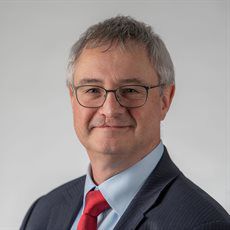
Chair and Lead - Birmingham Brain Tumour Network
Professor of Neurosurgery, Chair Birmingham Brain Cancer Programme - University of Birmingham
Honorary Consultant Neurosurgeon - University Hospitals Birmingham
Professor Colin Watts leads the newly established Brain Cancer Programme at the University of Birmingham. His research aims to improve the treatment and survival of patients with glioma by understanding the molecular genetic heterogeneity of individual tumours and using that data to develop novel molecular and functional stratification suitable for application in clinical trials. His clinical practice specializes in neurosurgical oncology with a particular interest in intrinsic gliomas and cerebral metastases.
We need to bring patients and research together to develop new strategies that get the right treatments to the right patient at the right time and address the multiple challenges of brain tumours. We are developing the largest trial in brain cancer in the UK to develop better drugs and improve the quality of life for patients. Find out how to support our research through the Birmingham in Action campaign.
Dr Victoria Wykes
Dr Victoria Wykes
Dr. Victoria Wykes
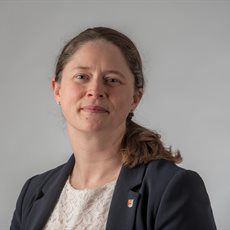
Co-Lead - Birmingham Brain Tumour Network
Associate Clinical Professor - University of Birmingham
Honorary Neurosurgical Consultant - University Hospitals Birmingham
Chair - BERTI
Victoria Wykes is an Associate Clinical Professor at the Department of Cancer and Genomic Sciences at the University of Birmingham and an Honorary Consultant Neurosurgeon at University Hospital Birmingham, sub-specialising in neurosurgical oncology and epilepsy surgery.
Victoria is the local principal investigator for the Tessa Jowell Brain Matrix study and chief investigator for Brain Surgical Tissue for Advanced Tissue Models (BRAIN STAT).
Dr John Apps
Dr John Apps
Dr John Apps
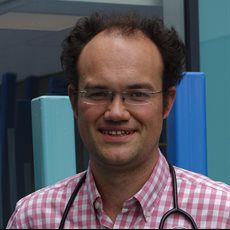
Associate Clinical Professor in Paediatric Neuro-Oncology - University of Birmingham
Academic Paediatric Neuro-Oncologist working across the University of Birmingham and Birmingham Children’s Hospital, with a specialist interest in Craniopharyngioma and rare brain tumours, as well as imaging, data integration, artificial intelligence, and clinical trials.
Throughout his career, he has combined research with clinical care. As an undergraduate at Cambridge, he developed an interest in cancer biology, completing a BA in Cancer Biology and Immunology. After qualifying, he entered the academic training programme in London, completing an Academic Foundation Programme and Academic Clinical Fellowship before undertaking a PhD in the lab of Professor Juan Pedro Martinez-Barbera at UCL, studying the biology of Craniopharyngioma.
He moved to Birmingham in 2018 and undertook a Clinical Trials Fellowship and Academic Clinical Lectureship, expanding his focus to include other rare tumours, clinical trials, imaging, and data integration, most recently working closely with Professor Andrew Peet.
Professor Jason Parsons
Professor Jason Parsons
Professor Jason Parsons
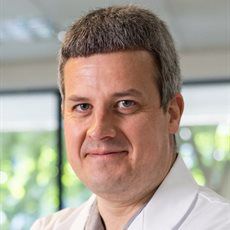
Professor of Radiobiology - University of Birmingham
Professor Jason Parsons is the Chair of Radiobiology across the Department of Cancer and Genomic Sciencesin the College of Medicine and Health and the School of Physics and Astronomy in the College of Engineering and Physical Sciences.
A particular interest of the Parsons Group is to examine the molecular and cellular effects of different forms of radiotherapy (ionising radiation) on specific tumour models, with a focus on head and neck cancers and those of the adult brain (glioblastoma). This includes translational research examining the impact of conventional X-ray radiation, proton beam therapy and other particle ions with increasing ionisation densities (linear energy transfer, LET), utilising the unique radiation facilities present in Birmingham including the MC40 cyclotron. We are also exploring the impact of biological (hypoxia) and physical (dose rate delivery, FLASH) factors on radiobiology, and the identification of novel or targeted drugs that can enhance tumour radiosensitisation in response to the different radiotherapy types. Our long term goal is to utilise our preclinical and translational research for contributing to novel strategies using radiotherapy for enhancing treatment of tumours of the head and neck, and brain.
Professor Parsons has published >70 peer-reviewed publications and reviews on the topics of radiation biology and DNA damage repair. His is currently Vice-Chair of the Association for Radiation Research (ARR) and is funded by grants from the Medical Research Council (MRC) and the National Institutes of Health (NIH).
Professor Andrew Beggs
Professor Andrew Beggs
Professor Andrew Beggs
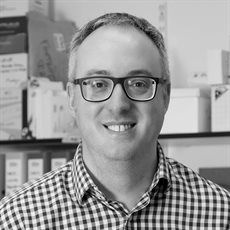
Professor of Cancer Genetics & Surgery - University of Birmingham
Deputy Director – Birmingham Experimental Cancer Medicine Centre
Andrew Beggs is a Professor of Cancer Genetics & Surgery in the Department of Cancer and Genomic Sciences, University of Birmingham. He is also the Deputy Director of the Birmingham Experimental Cancer Medicine Centre and Theme Lead for Biomarkers and Liquid Biopsy. He also is Head of Somatic Cancer in the Central and South Genomic Medicine Service Alliance. He is a fellow of the Alan Turing Institute and has recently been awarded an MRC Senior Clinical Fellowship.
Currently funded by multiple industrial partners as well as the MRC, BBSRC, Sarcoma UK and Cancer Research UK, Andrew’s lab research encompasses organoid models of cancer, cancer biology and omics technologies in medicine. He is also a Consultant Colorectal & General Surgeon at the Queen Elizabeth Hospital in Birmingham with specialist interest in laparoscopic (keyhole) cancer surgery and familial cancer syndromes for which he runs as part of a national service. He is also an honorary consultant surgeon at Birmingham Childrens and Women's Hospitals.
His major research interests include solid tumour cancer biology and translational medicine. He has published articles in Nature, Nature Biotechnology, Nature Genetics, the BMJ, The Lancet, Gut, Journal of Pathology and PLoS Genetics. He collaborated in writing the European consensus guidelines for the management of Peutz-Jeghers syndrome.
Professor Daniel A. Tennant
Professor Daniel A. Tennant
Professor Daniel A. Tennant
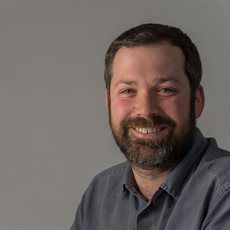
Professor of Biochemistry - University of Birmingham
Theme Lead (Metabolism) and Deputy Head of Department
Professor Daniel Tennant is a Professor of Biochemistry in the Department of Metabolism and Systems Science, situated on the second floor of the Institute of Biomedical Research. He uses stable isotope tracers to investigate changes in the use of nutrients in conditions where oxygen is limiting (hypoxia), or in the presence of genetic mutations that induce a hypoxia-like response. Dan applies the fundamental knowledge gained from these research projects to understand the pathogenesis of diseases where changes in oxygenation play a role; in particular, cancer.
Dan also directs the Metabolic Tracer Analysis Core (MTAC) within the Department in order to develop novel means to analyse cellular and tissue metabolism using stable isotope tracer molecules, and collaborates with groups worldwide who are interested in using these techniques to study the metabolism of their system, or the metabolism of labelled product.
Professor Tennant publishes both primary research and reviews in high impact journals, including Nature Communications, Cell Metabolism, Nature Reviews Cancer and Cell, and is regularly asked to speak at international conferences.
Professor Mathew Coleman
Professor Mathew Coleman
Professor Mathew Coleman
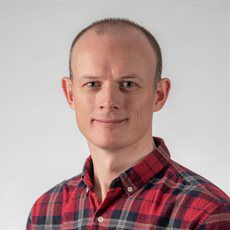
Head of Department of Cancer and Genomic Sciences
Professor in Tumour Cell Biology
Theme Lead for Translational Biology and Genetics - University of Birmingham
Mathew Coleman is Head of the Department of Cancer and Genomic Sciences. He is a a Professor in Tumour Cell Biology where his research focusses on the role of protein hydroxylation in the cell biology of tumour cells. He is also Theme Lead for Translational Biology and Genetics.
Mathew has attracted highly competitive funding support from Cancer Research UK, the MRC, BBSRC and Glaxo Smith Kline. His work on protein hydroxylation has led to patents, and highly cited articles and high impact research and review publications including most recently in Nature, Nature Chemical Biology, PNAS and Molecular Cell.
Dr Ameeta Retzer
Dr Ameeta Retzer
Dr Ameeta Retzer
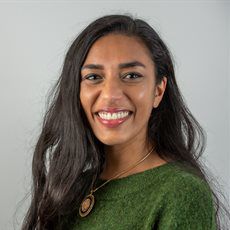
Associate Professor - University of Birmingham
Ameeta is a mixed methods researcher with expertise in outcome methodology, applied health, health inequalities and public health, and research equity. She is based at the Birmingham Centre for Evidence and Implementation Science, leading the Methods and Policy group.
Ameeta has a background in social science and population health research, with particular focus on groups experiencing marginalisation.
Before joining the Department of Applied Health Sciences at the University of Birmingham in 2016, Ameeta worked at the University of Warwick on a Department for Education-funded project analysing serious case reviews and child protection data. In Birmingham, as a member of the Centre for Patient Reported Outcomes Research, Ameeta developed core outcome sets and patient-reported outcome methodology for use across the translational pathway, from early phase trials to routine practice. Ameeta joined the National Institute for Health and Care Research (NIHR) Applied Research Collaboration West Midlands (ARC WM) public health theme in 2021, undertaking responsive intervention evaluations.
Dr Vinton Cheng
Dr Vinton Cheng
Dr Vinton Cheng
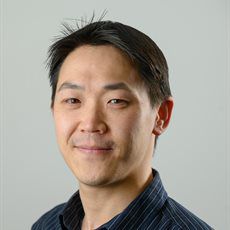
Associate Clinical Professor - University of Birmingham
Honorary Consultant in Medical Oncology - University Hospitals Birmingham
Dr Vinton Cheng is an Associate Clinical Professor and Honorary Consultant in Medical Oncology with a clinical focus on the holistic management of adult patients with primary and metastatic brain tumours, including through the delivery of systemic therapies. Dr Cheng's research interests are in developing systemic therapy trials for brain tumour patients and studying the progression of cancer in the brain. He also has a strong background in pre-clinical models of brain tumours, having developed orthotopic and advanced brain metastasis syngeneic/xenograft models. He is particularly interested in interdisciplinary research and innovation.